
Ricardian Places
Scotland
Edinburgh
The historic capital city of Scotland, the following is designed to help you walk in the footsteps of Richard, Duke of Gloucester in 1482. All of these places of interest are located within Edinburgh’s famous Old Town, the medieval heart of this ancient city.
Edinburgh Castle
The world famous visitor attraction that is also the UK’s number one attraction, Edinburgh Castle offers stunning views across the city to the Firth of Forth and Fife. In 1482, King James III was held here in captivity. It is not known if Richard visited the castle, although the sixteenth century Pitscottie’s Chronicle suggests that he and the Duke of Albany progressed to the castle preceded by two heralds, after negotiations had taken place in the Old Tolbooth. Edinburgh Castle, one of the main homes of Scotland’s monarchy, with a rich history, numbers amongst its medieval must-sees its Great Hall, the Scottish Crown Jewels and Stone of Destiny (returned to Scotland in 1996) and, of course, Mons Meg, one of the largest bombards, built in Burgundy in 1449.
The Old Tolbooth and Heart of Midlothian
Built in c.1438, the Old Tolbooth was a five storey building situated at the north west corner of St Giles’ Cathedral. It held a hall which also served as a chapel and was the meeting place for Scotland’s Parliament, Council and Law Courts during the reigns of James II, III, IV and V. It was here that Richard spoke to the leading Scottish lords and councillors to secure an alliance with King Edward. In about 1480 a prison had been included but in 1817 the building was demolished. However, its footprint is marked today by brass tiles in the pavement and its entranceway by the famous Heart of Midlothian mosaic, formed out of ancient granite setts. For those interested in seeing the Tolbooth’s medieval stones they now form a tenement building on the corner of Trafalgar Street and Trafalgar Lane in Leith, known locally as the gaol building.
St Giles Cathedral
Founded by David I in 1184, the Cathedral is now the High Kirk of Edinburgh, having been stripped of its Catholic decoration in 1559 by the famous ‘Thunderer’ John Knox. Although we do not know if Richard visited St Giles, its close proximity to the Old Tolbooth and its Albany Aisle (built c.1401-10) would suggest a visit was likely. The Cathedral also holds the chapel of the Order of the Thistle, Scotland’s foremost order of chivalry (c.1909).
Gloucester Gate
Situated on the Royal Mile and very close to Holyrood Palace, Gloucester Gate guards the entranceway to one of the Old Town’s medieval streets, Forsyth Close. We’ve been unable to discover why it was given this particular (English) name.
The Palace of Holyroodhouse and Abbey
Holyrood Palace, as it is known today, is the official residence of the British monarch in Scotland. In 1482 it was the site of an enlarged Augustinian abbey that included an abbey church, guest houses and royal chambers for the sovereign. It is therefore possible that Richard (and Albany) stayed in the guest house. Although the palace was largely built by James IV its main connections today are with Mary, Queen of Scots, and Bonnie Prince Charlie. However, it is well worth a visit to see a painted panel and votive altarpiece of Henry VII and his family with St George slaying the dragon. Situated in the bedchamber of Mary, Queen of Scots, the panel is believed to have been commissioned between February 1503 and January 1509 by Henry for a chapel in Richmond Palace. It is thought the dragon depicts Richard III and is noticeable by its manner of death in this unabashed Tudor propaganda.
Priory of the Blackfriars
The historical figure known as Richard of England (otherwise known as Perkin Warbeck) stayed here in 1496. Sadly the friary is no longer extant but its entry is marked by Blackfriars Street and its location bordered by the Cowgate and south towards Drummond Street is the location of Kirk o’Field, where the body of the murdered Lord Darnley was discovered in 1567.
Parish Church of St Cuthbert, Princes Street Gardens
It is not known if Richard visited this church but a story about its origin suggests that St Cuthbert stayed in a sheltered hollow below the Castle Rock and thus the church was built. Today it is mainly a Georgian building and the burial place of the acclaimed Edinburgh painter, Sir Henry Raeburn (1756-1823).

Edinburgh Castle
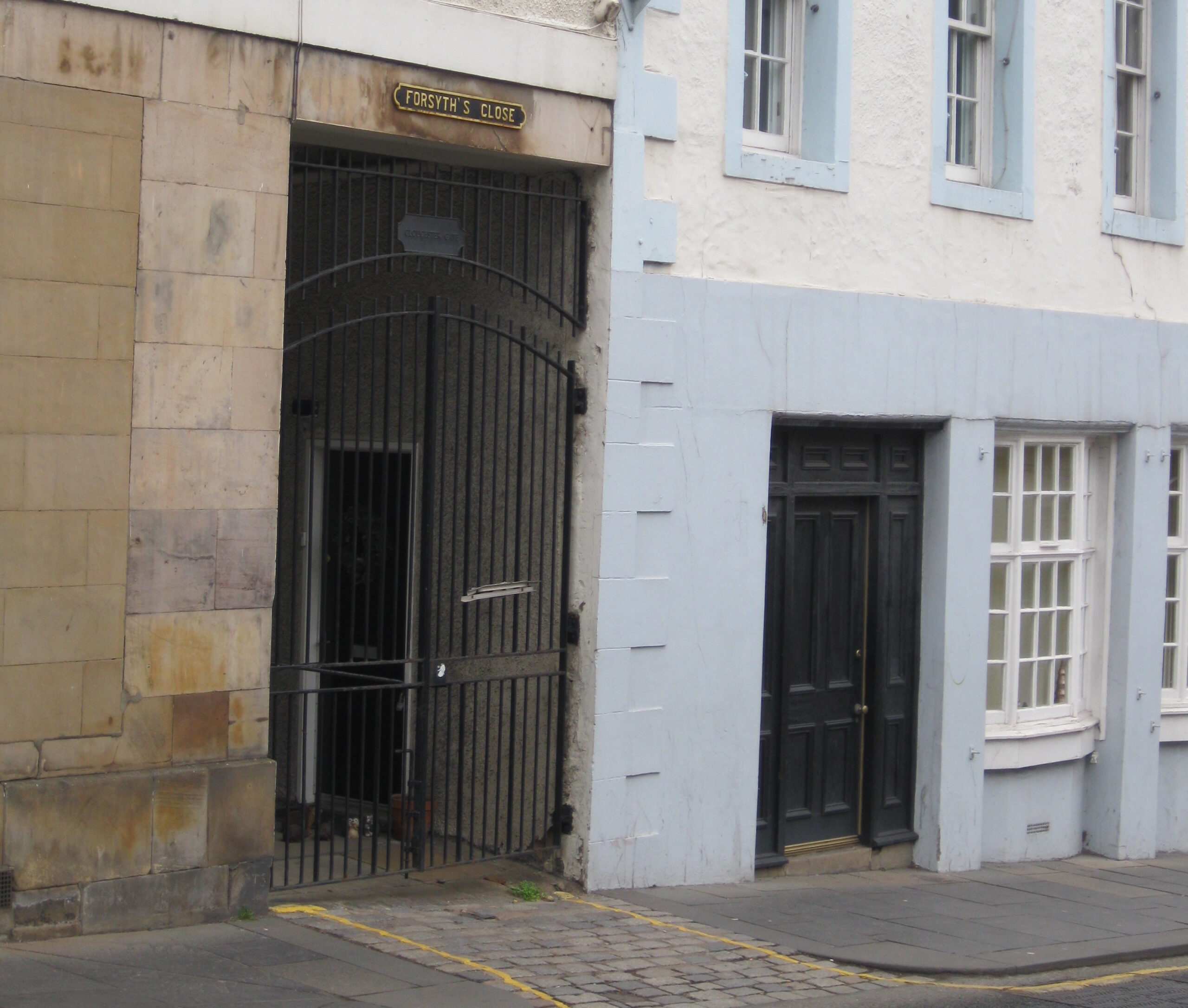
Gloucester Gate and Forsyth Close, the Royal Mile (photo courtesy of Philippa Langley)
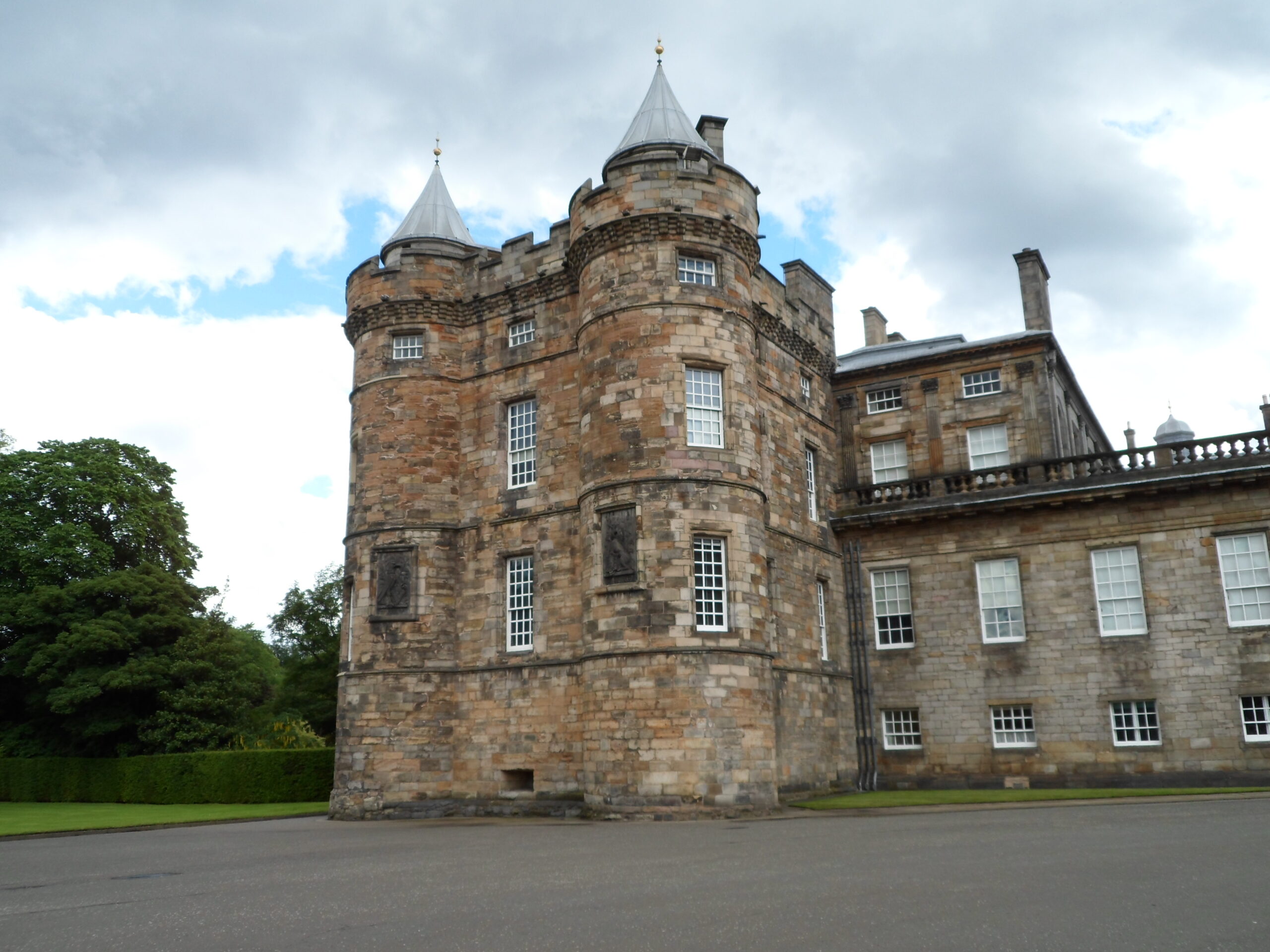
Palace of Holyroodhouse (photo courtesy of Katie Dungate)
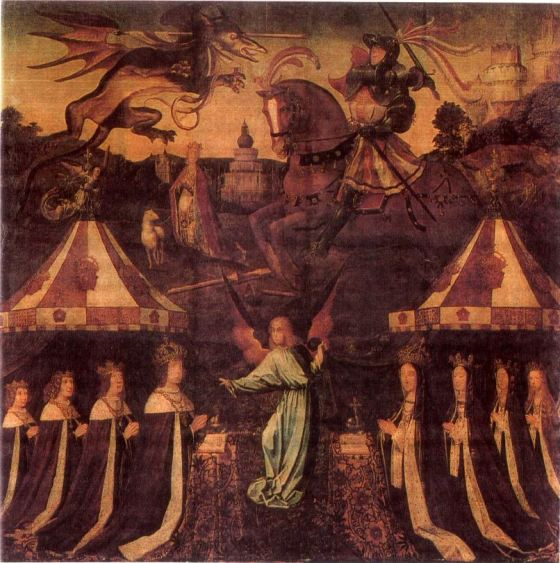
Henry VII altarpiece with Richard III depicted as a dragon, the Palace of Holyroodhouse (photo courtesy of Philippa Langley)
Lennoxlove House, near Haddington
Originally known as Lethington Castle, this is where Richard camped his army on his way to Edinburgh. The location is known as Belvedere and the land, now covered with trees, sits opposite the medieval tower. It is not known if Richard received accommodation in the tower itself. Scottish historian J H Ramsay believes that this is where Richard spoke to the Scottish lords who had advanced there with a small army, and then entered Edinburgh peaceably with them. Please note that Richard’s army camped on the Burgh Muir of Edinburgh; a large tract of land located directly to the south of the city towards Gilmerton, but which is now built on. Lennoxlove is open on specific days between Easter and the end of October. The house also holds a portrait of Henry VI.
Falkland Palace and Garden
Falkland Palace became the country residence of the Royal Stuart monarchs after being transformed by James IV. Associated with Richard of England, it is one of the finest examples of Renaissance architecture in Scotland and home to an original real tennis court.
Stirling Castle
Stirling Castle is Scotland’s most impregnable fortress and home to its monarchs, dating from the twelfth century. Associated mainly with James IV, it may also have been visited by Richard of England. Piscottie’s Chronicle believed Richard, Duke of Gloucester, had travelled to Stirling Castle with James III but this is unlikely, due to the Scottish king still being incarcerated as well as the timeline and logistics involved.
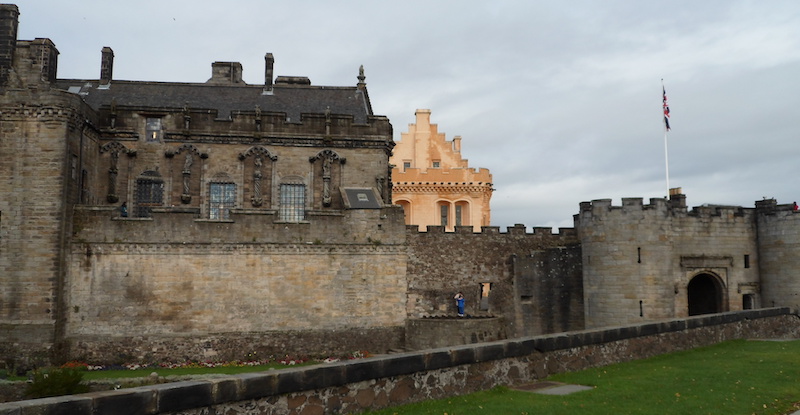
Stirling Castle (photo courtesy of Katie Dungate)