
The Wars of the Roses
Other military campaigns

Introduction
During the civil conflict within England, or in one case as a direct result of such conflict, relations with foreign kingdoms deteriorated and England was involved in three external wars between 1471 and 1482, although none resulted in any major military engagements. A summary of each campaign is given below. The further reading lists are specific to each event but should be used in conjunction with the main histories of the period.
War between England and Burgundy, February 1471
For a brief period of time, England, allied with France, was at war with Burgundy. This came about due to the domestic problems between King Edward IV and his cousin and erstwhile ally, Richard Neville, Earl of Warwick. On 3rd October 1470 the king fled to Burgundy and Warwick assumed control of the government. In November 1470 French ambassadors arrived in England to close an agreement between Warwick and King Louis XI to make war on Burgundy. On 6th February 1471 the Bishop of Bayeux wrote to his king to confirm that the alliance between Warwick and France against King Edward and Charles, Duke of Burgundy, was now agreed. The same day Warwick wrote to the Calais garrison ordering them to begin the war. He had already begun preparations in England to assemble a force which he would personally take command of, to support the King of France against Burgundy.
Following the outbreak of hostilities by the French and their success in taking St Quentin, Charles, Duke of Burgundy was terrified at the prospect of an Anglo-French alliance and he met with the exiled English king in early January 1471. Charles now had no doubt of the expediency of fully supporting his brother-in-law and provided the necessary resources for King Edward to return to England and regain his throne. In March, Edward landed at Ravenspur and by 14th April Warwick was dead on the battlefield of Barnet.
Further Reading
- ‘The Wars of the Roses: a new footnote’ by G. R. C. Davis in British Museum Quarterly, vol. 20, 1955-6.
- ‘Outbreak of War Between England and Burgundy in February 1471’ by A. R. Myers in British Institute of Historical Research, May 1960. Examination of a letter from Warwick to Louis XI promising England’s support against the Duke of Burgundy.
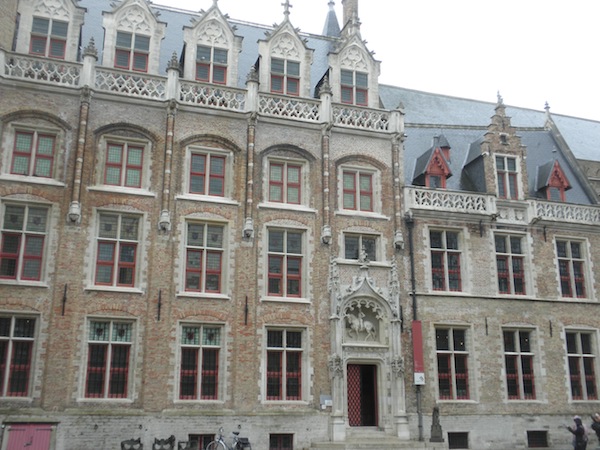
The house of Louis of Gruuthuse where King Edward IV and Richard, Duke of Gloucester spent time during their exile in Bruges.
Richard, Duke of Gloucester and the French Campaign of 1475
by Livia Visser-Fuchs
To Edward IV himself his military expedition into France and its auspicious outcome in the shape of peace and marriage treaties, together and a large lifelong annual tribute from the King of France, may have been the most successful and satisfactory undertaking of his life. When he had to select a theme for the misericord on his own royal seat in the new choir of St George’s Chapel, Windsor, where the sumptuous chapters of his beloved Order of the Garter were to be held, he chose to have a carving of himself and Louis XI conversing on the bridge of Picquigny, surrounded by their soldiers. The misericord hidden underneath the King’s seat was unlikely to be seen by many people and the scene could never have much ‘propaganda value’, but this was the episode in his life that Edward himself wished to be reminded of while praying in the chapel he founded – until the peace was broken by Louis XI at the end of 1482, a disaster that had a profound effect on Edward, perhaps even impairing his health.
Ever since he returned from exile and regained his crown in 1471 Edward had been planning a French campaign to be organised jointly with his brother-in-law Charles, Duke of Burgundy, and intended to carve up the kingdom of France and share it between them. In the end the preparations took until the summer of 1475. All possible friends and enemies had to be alerted, neutralised or paid compensation for past injuries: Scotland, Brittany, the Hanse, Naples, Urbino, Hungary, Spain and Denmark. Parliament and individuals had to be asked for money, ships had to be commandeered at home and hired abroad. Soldiers, particularly archers, and craftsmen had to be found and impressed, and weapons of all kinds collected: in the end Edward’s artillery train was said to be more impressive than even the Duke of Burgundy’s. The exact size of the army that crossed the sea in June 1475 is not known, but the high nobility and the royal household were well represented. The Duke of Clarence, for example, brought 120 men-at-arms and a thousand archers, but in the end brought more, lesser lords were accompanied by a dozen archers; the total of participants was at least 13,000.
The huge army crossed to Calais, where it waited for Duke Charles, the one ally on whose military support depended the success of the expedition, to arrive with his troops. The Duke had other priorities, however: he was besieging the town of Neuss as part of his efforts to spread his influence eastward into the German empire. He turned up with only a small retinue, full of praise for the English army and various promises and suggestions. In the end the King and his army marched slowly into France, the Duke accompanying them for part of the way, but clearly not intending to give major support. As soon as Charles had ridden back to Neuss, Edward started negotiations with Louis XI, who was keeping his troops in readiness but much preferred to come to an amicable agreement. Edward and most English lords were of the same mind. The Duke of Gloucester and a few others are said by continental chroniclers to have disagreed, but how much truth there is in this claim cannot be established.
Louis offered Edward 75,000 crowns immediately and 25,000 annually for as long as they both lived, plus the marriage of his eldest son to one of Edward’s daughters. A speedy conclusion was reached when the two kings met on 29th August on a specially constructed bridge at the town of Picquigny, just west of Amiens, each followed by his army in battle array as far as Amiens to satisfy the honour of both. Clarence was one of those who accompanied Edward on the bridge. Richard did what one would expect from a commander having a few hours of free time: he went to have a look at the opposing army. The Admiral of France, Louis, Bastard of Bourbon, showed off the army of the King of France, which was drawn up in the field to ‘the Duke of Gloucester and other lords’. Bourbon in his turn visited the English army.
A different slant must be given to the story that the King of France was able to bribe the war mongering Duke of Gloucester into compliance, with gifts of horses and costly tableware, as many commentators since Philippe de Commynes have asserted. The fact is that Richard and George, Duke of Clarence, who is not said to have objected to the peace, went to visit Louis XI together: a German eyewitness recorded that “on the Thursday, 31st August, the two brothers of the King of England came to Amiens and dined with the King in the morning”. Their visit was in fact no more than a polite gesture and part of the general comings and goings at Amiens, shortly before the English left for home the same day.
At the time and ever since, commentators have objected to the way Edward allowed his invasion to be brought to a bloodless and inglorious end and it has been asked whether he ever meant to fight any battle. The unwarlike ending of the great campaign appeared not to be sufficiently ‘honourable’ and it is indeed possible that Richard, Duke of Gloucester thought so, but he was not the King and it has also been suggested that there is a difference between a king and his knights. Edward had had his share of battles to gain and regain his crown and once he was king the demands of government and diplomacy shaped his attitude to war, as they were to shape Richard’s own, who, after a period of successful military activity in his brother’s service, once he had become king naturally turned to peace himself. As said above, it is undeniable that Edward was excessively pleased with the outcome of ‘his great enterprise’ and we will never know whether he planned it like this. It must also be remembered that two of the surviving poems lamenting Edward’s death regarded the French campaign as a great victory, emphasising that France had to pay ‘tribute’, and that it was such a clean victory, “without a stroke, and afterward came home.”
Further Reading
- Edward IV’s French Expedition of 1475 . The Leaders and their Badges. by F. P. Barnard, Oxford 1925, repr. Dursley, 1975.
- ‘The Hundred Years War and Edward IV’s 1475 campaign in France’ by J. R. Lander in Tudor Men and Institutions, ed. A. J. Slavin, Baton Rouge, Louisiana, 1972, pp. 70-100.
- Edward IV by Charles Ross, London, 1974 pt III, 9, ‘The King’s Great Enterprise’,1472-1475.
- The Life and Reign of Edward the Fourth, 2 vols, London, 1923, vol 2, bk IV, ‘England and France’.
- ‘Chivalry and the Yorkist kings’ by Anne F. Sutton and Livia Visser-Fuchs in St George’s Chapel, Windsor, in the Fifteenth Century, ed. C. Richmond and E. Scarf, Windsor, 2001, pp. 107-33.
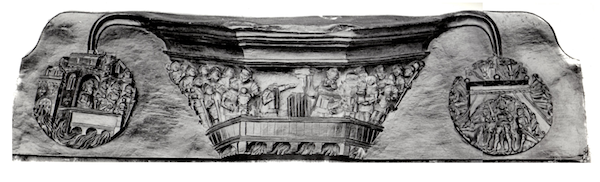
The Picquigny Misericord, St George's Chapel, Windsor ©Geoffrey Wheeler
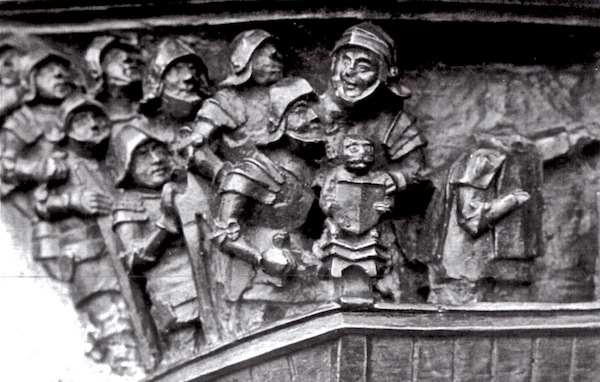
The French on the bridge at Picquigny ©Geoffrey Wheeler
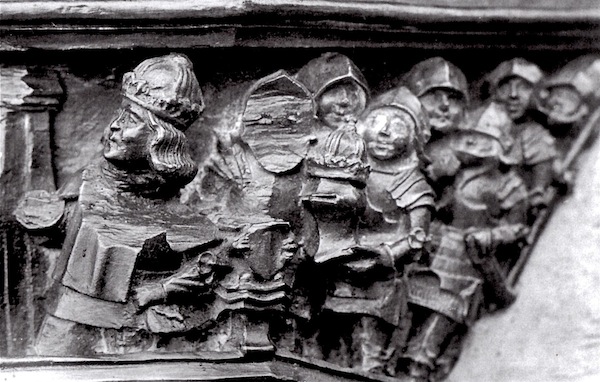
The English on the bridge at Picquigny ©Geoffrey Wheeler
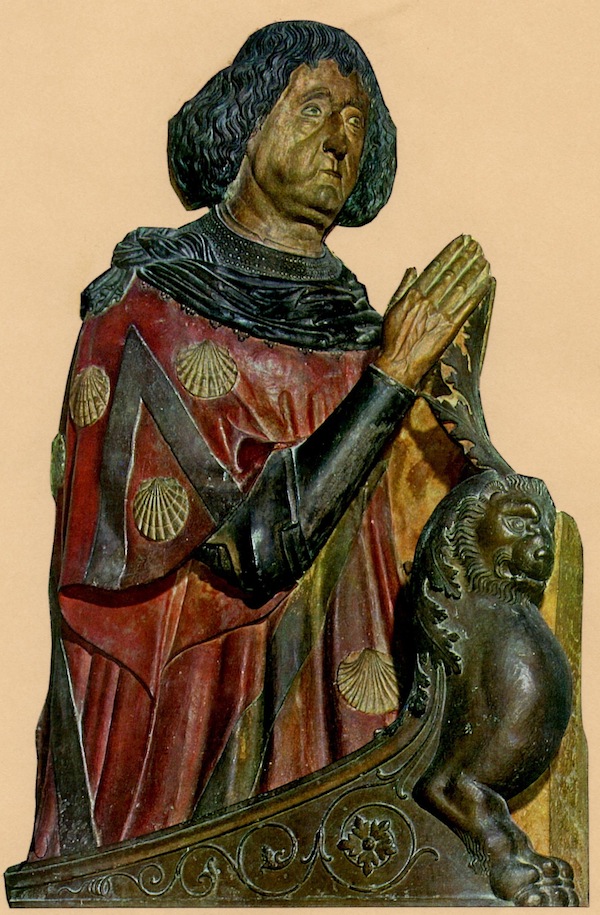
Phillipe de Commynes ©Geoffrey Wheeler
The War with Scotland 1482
King Edward IV had signed a treaty with Scotland in 1474 and relations between the two countries had been amicable, with the King paying instalments on his daughter Cecily’s dowry in preparation for her marriage to the heir to the Scottish throne. By the late 1470s, however, the Scots began breaking the truce and once again the border country was the subject of raids and pillaging. European politics may have been at the root of the problem. France and Burgundy were at odds and Louis XI of France may have encouraged James III of Scotland to renew the auld alliance with his country. If Scotland breached their treaty with England and Edward had to concern himself with his northern border, Louis could hope that the English King would not become too interested in what was happening on the continent.
Edward’s response to the Scottish aggression was to send Alexander Legh to demand reparation, and, if this was not agreed, to threaten James III with war. However, Edward would be satisfied if the Scottish heir was handed over to the English to guarantee the marriage with Cecily and that Berwick was restored to England. James III refused on both counts and the English began preparations for war. On 12th May 1480 Richard, Duke of Gloucester was appointed Lieutenant-General, and in June commissions of array were issued in three of the northern counties. James became nervous at this point and made overtures to the English but these were rejected and in November Edward announced he intended to prosecute the war personally the following year.
In the late spring of 1481 Lord John Howard sailed into the Firth of Forth destroying and capturing Scottish ships and burning Blackness. Richard, Duke of Gloucester had in the meantime recruited men to the border garrisons and worked closely with the Earl of Northumberland to establish how many men could be called upon for the invasion. Richard, along with the Scottish renegade Earl of Douglas, was also given the task of suborning key Scottish lords to weaken King James’ support, but this covert activity met with little success. In March Richard had visited London to discuss the invasion plans but was no doubt dismayed later in the year to learn that the King had decided not to undertake the campaign himself because of ‘adverse turmoil’ and left Richard and Northumberland “to wage a vigorous war against the Scots” (Scofield 11, p. 321). King Edward did travel as far as Nottingham where he arrived on 1st October and stayed until the 20th. Richard met him there, and it was no doubt agreed that it was too late in the season for the full invasion to take place that year. In Richard’s absence from the immediate vicinity of the war, Northumberland may have appealed to the citizens of York for men in a letter dated 13th October when he reported the Scots were already in his eponymous county. The year of the letter is uncertain (Kendall attributed it to 1480) but the incident may well be the one recorded by the Scottish historian John Leslie that the “borderers invaded the marches of England and took away many preys of goods and destroyed many towns and led many persons in Scotland”. Following the fresh news of Scottish incursions into England Richard returned to the front, laid siege to the town and citadel of Berwick, which he failed to take, and was no doubt involved in the “intermittent warfare (that) continued all along the border during the winter” (Ross, p. 282).
The new year brought a new campaigning season and on 21st February Richard received a commission to obtain the necessary victuals for his army, with leave to find them anywhere in England, Wales and Ireland. The harvest had been poor, hence permission was also granted to find grain and crops wherever they were available. On 22nd May Richard led an attack into southwest Scotland and reached Dumfries which he burned amongst other towns. Events now took an unexpected turn when the brother of James III, the Duke of Albany, arrived in England from France where he had been living since fleeing Scotland in 1479. King Edward welcomed the Scottish traitor and during a stay at Fotheringhay, where they were joined by Richard, a treaty was agreed on 11th June, in which the English king recognised Albany’s claim to the throne of Scotland. The following day Richard was confirmed as Lieutenant-General of the North and with Albany set out on the invasion of Scotland. He had authority to raise an army of around 20,000 men and sufficient funds to pay them for four weeks. The muster was complete by mid-July and the army crossed the border.
The English host was large enough to terrify Berwick and the town fell to Richard without further delay, although the citadel held out. Lord Stanley was left to continue the siege whilst Richard moved north, devastating Roxburghshire and Berwickshire, all the while expecting to meet the Scottish army. He was to be disappointed. On 22nd July, King James’s dissatisfied subjects had taken their king prisoner at Lauder, executed his favourites and returned with their royal prisoner to Edinburgh. As Richard moved towards the capital, the rebels moved to Haddington, situated fifteen miles to the east and awaited developments.
Richard found himself entering an undefended Scottish capital. He controlled his army and the city was not molested. The King’s captors were prepared to negotiate with Richard. Albany immediately abandoned his hope of becoming king and settled for the restoration of his lands and position. The Scots asked for a peace treaty and that the proposed marriage between the Scottish heir and Cecily take place. Richard demanded the return of Berwick Castle and the dowry paid for the princess. The settlement was that the marriage would go ahead if it were Edward’s wish, otherwise the dowry would be repaid. Richard left Edinburgh, disbanded most of his army at Berwick on 11th August, and continued with the siege. The castle fell on 24th August and has been part of England ever since.
The Crowland Chronicler was dismissive of the campaign – that it cost too much for such little gain and that King Edward was grieved at the ‘frivolous expenditure’. It is, however, difficult to see what other outcome there could have been. Richard, on the ground, would have appreciated the mood of the Scots and that it would not be possible to establish Albany on the throne, although the situation might have been different if the Scottish army had been vanquished. In any event, this was not one of the original aims of the war. Richard himself was also keenly aware of the cost of the army and that he could not afford to prolong the negotiations or his stay in Scotland.
Further Reading
- Edward IV, Charles Ross, London, 1974.
- James III: A Political Study, Norman Macdougall, Edinburgh, 1982.
- Richard The Third, Paul Murray Kendall, London, 1955.
- The Life and Reign of Edward the Fourth, Cora L. Scofield, 2 vols, London 1924, reprinted 1967.
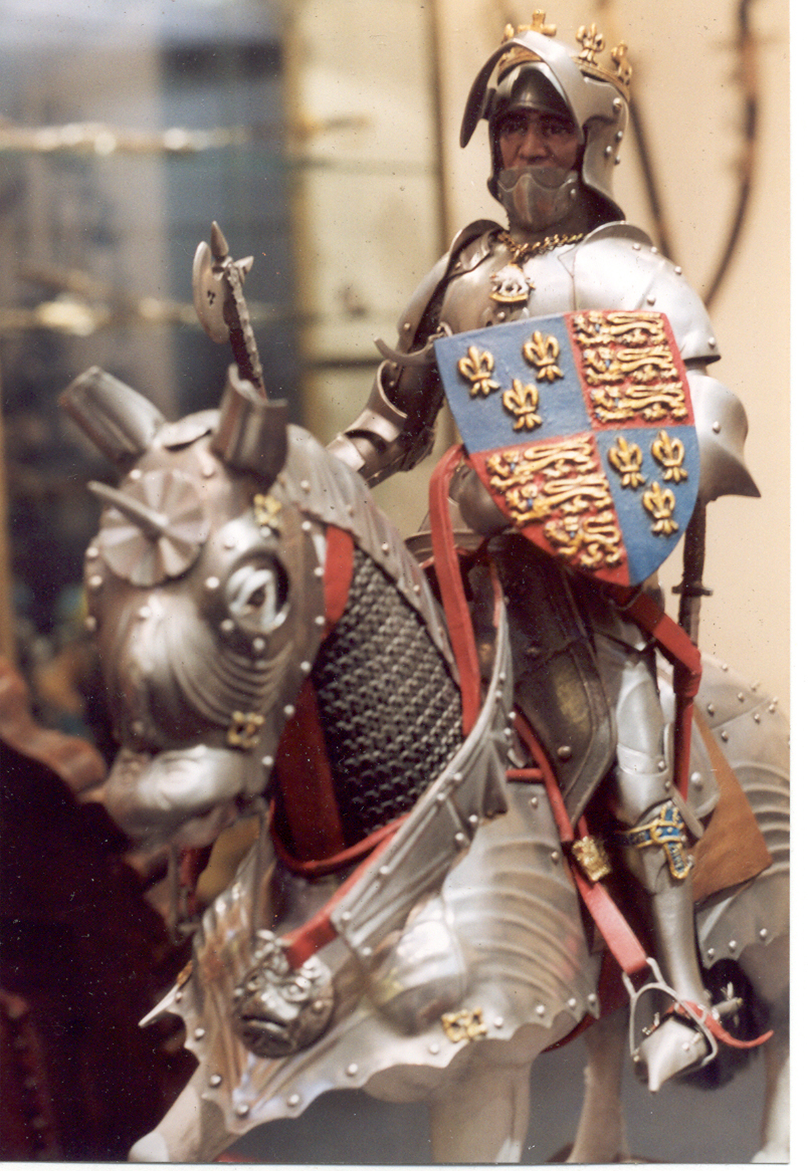
Model of Richard III by Peter Dale ©Geoffrey Wheeler
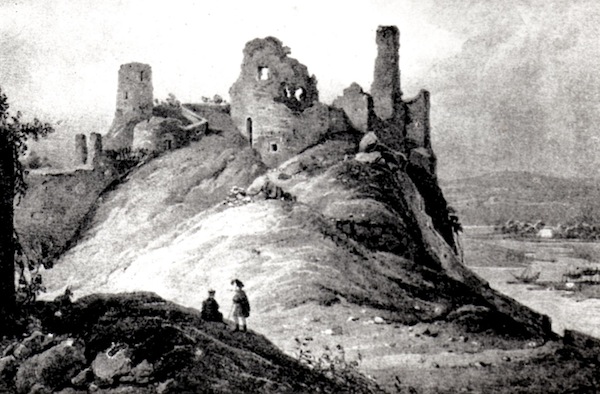
Engraving of Berwick Castle ©Geoffrey Wheeler
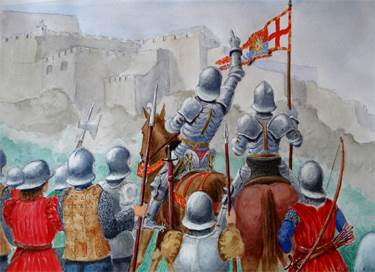
Richard approaches Edinburgh by Gerry Hitch