
Richard’s Family
Richard, Duke of York (Father)
by Matthew Lewis
Richard, 3rd Duke of York was born on 21st September 1411, the second surviving child and first surviving son of Richard of Conisburgh, later Earl of Cambridge and his wife Anne Mortimer. Richard of Conisburgh was the younger son of Edmund, 1st Duke of York and therefore a grandson of King Edward III. Edmund’s older son Edward became 2nd Duke of York on their father’s death in 1402. Anne Mortimer was the daughter of Roger Mortimer, 4th Earl of March and sister to Edmund Mortimer, 5th Earl of March.
Anne Mortimer died shortly after the birth of her son Richard, perhaps from complications following the delivery. Richard of Conisburgh was created Earl of Cambridge by Henry V in 1414 but given insufficient income to support himself. Resentment at his treatment may have led to his involvement in the Southampton Plot to unseat Henry V and place Richard’s brother in law Edmund Mortimer on the throne. Edmund himself exposed the plot to Henry V and Richard was executed on 5th August 1415. Edward, 2nd Duke of York was the highest profile English casualty at the Battle of Agincourt on 25th October 1415. He died without any legitimate children, so the dukedom passed to his nephew, Richard, who became 3rd Duke of York.
During the remainder of Henry V’s rule, Richard was placed in the care of Sir Robert Waterton, who was also gaoler to several of the most famous French prisoners captured at Agincourt. It is possible that Richard met these men and heard their tales of warning about a kingdom ruled by a mentally unstable king, riven by faction and laid open to foreign invasion. If he did, they may well have left a lasting impression. Shortly after Henry V’s death in 1422, Richard became a ward of Ralph Neville, Earl of Westmorland, whose investment of 3,000 marks soon paid dividends. In 1425, Richard’s maternal uncle Edmund, Earl of March died without a legitimate heir and Richard inherited the vast wealth and holdings of the Mortimer family, concentrated on the Welsh borders. Richard was married soon after to Ralph’s youngest daughter, Cecily Neville.
In 1428 Richard was summoned to attend the court of his seven year old second cousin, once removed, King Henry VI. As he moved closer to the age of majority, this may have been a move to bring him into the centre of government or to keep a closer watch on one deemed a potential threat. The Mortimer family had been viewed as Richard II’s heirs presumptive before Henry IV had taken the throne. Richard’s position as Duke of York and, more importantly, as the Mortimer heir might have made the Lancastrian regime nervous. On 6th November 1429 Richard attended Henry’s coronation at Westminster Abbey and in 1430 he travelled to France where he was a high profile attendee of Henry’s coronation as King of France in Paris on 16th December 1431.
Richard was permitted to take up livery in 1432, when he was declared of age. He was 3rd Duke of York, 4th Earl of Cambridge, 6th Earl of March, 2nd Earl of Rutland and 7th Earl of Ulster as well as holding a host of lordships. The wealthy Mortimer inheritance helped resolve the debts that had mired the dukedom of York since Edward’s time, leaving it all but bankrupt. When King Henry’s uncle John, Duke of Bedford died, it left the critical position of Regent of France vacant. Two factions had been at loggerheads for years during Henry’s childhood; one led by his other paternal uncle Humphrey, Duke of Gloucester and the other by his great uncle Cardinal Henry Beaufort, Bishop of Winchester, who had been bankrolling the government for many years. The Cardinal wished to promote his nephews but Gloucester chose Richard for the position and he was appointed lieutenant-general in France for one year.
Arriving in France in June 1436, Richard established himself at Rouen, the capital of Normandy, due to the fall of Paris two months earlier. The short term of his appointment and the reduction in powers from those of a regent severely hampered Richard’s effort. He left military matters to the vastly experienced John Talbot and focussed on administration, though he did step up the tactic of destroying recaptured, strategically important castles to avoid the constant expense of losing and retaking them. At the end of Richard’s term, he made it known that he wished to return home but was required to await the arrival of his replacement, Richard Beauchamp, Earl of Warwick in November 1437. Warwick died in post on 30th April 1439 and Richard was selected to return to France, this time for a five year term and with increased powers. This period can be characterised as solid rather than spectacular. Richard maintained good relations with the French and concluded a peace treaty with Burgundy.
At the end of this term, Richard returned to England, apparently expecting to be reappointed, but on Christmas Eve 1446, Edmund Beaufort, 2nd Duke of Somerset was given the post and Richard was made Lord Lieutenant of Ireland. In early 1447, Humphrey, Duke of Gloucester was arrested and died in custody amid suspicion that he plotted against his nephew the king. Richard’s close association to the duke may have increased the suspicion around him and he decided to take up the role in Ireland in person. Richard arrived in Ireland in July 1449 and received a rapturous welcome, since his Mortimer heritage also brought him strong connections to Ireland. As had been the case in France, Richard soon found himself unpaid and out of pocket as he financed the government himself.
In 1450, following Cade’s Rebellion (which had links to the Mortimer name), Richard returned to England but when he landed, attempts were made to arrest him. The following decade would be spent in opposition to the court party around Henry VI, initially to Edmund Beaufort and then to Margaret of Anjou, Henry’s queen. By 1452, Richard was claiming that Beaufort was operating a whispering campaign against him. He raised an army and marched to Dartford, south of London. When Henry sent emissaries to obtain Richard’s demands, he asked for the arrest of Edmund Beaufort. When the king agreed to this term, Richard disbanded his men and went to the king, only to find that Beaufort was still at Henry’s side and it was Richard who was taken into custody and forced to swear an oath of allegiance to Henry at St Paul’s Cathedral.
When King Henry was left incapacitated by a bout of mental illness, a choice had to be made between Margaret and Richard to lead the government. Misogyny and mistrust of the French probably combined to influence the decision to appoint Richard as Lord Protector. His time in office marked a notably even handed period with genuine efforts to resolve the problems of crown finances. When Henry recovered on Christmas Day 1454, he was swift to remove Richard and restore Edmund Beaufort. The now intractable dispute led to a confrontation at the First Battle of St Albans on 22nd May 1455 during which Edmund Beaufort was killed and King Henry was injured. Richard was installed again as Lord Protector, though only briefly, before finding himself once more in the political wilderness.
Despite Henry’s efforts to reconcile the factions at his court, culminating in the Love Day of 24th March 1458, matters again came to a head in 1459 when Richard gathered another army in an apparent repeat of 1452. He left Ludlow but turned back at Worcester when he received news that Henry was approaching at the head of a numerically superior army. When part of York’s army deserted from Ludlow, he and his noble allies fled the town into exile. They were attainted and stripped of all their lands and titles. When Richard returned to England in 1460, with Henry a captive after the Battle of Northampton, it was to claim the throne by virtue of his Mortimer blood. Parliament eventually settled the matter in the Act of Accord, allowing Henry to remain king for his lifetime but appointing Richard and his heirs as Henry’s heirs.
On 30th December 1460, Richard was at Sandal Castle waiting to confront an army raised by Margaret of Anjou. According to An English Chronicle, Richard was tricked into leading his army into battle by Baron Neville, who then turned on him. Richard and his second son Edmund was killed. Richard’s oldest son went on to take the throne as Edward IV and his youngest son would later rule as Richard III. Through his granddaughter Elizabeth of York, Richard is a direct ancestor of all English and British monarchs from Henry VIII onwards. He is often remembered as a proud, belligerent and bellicose man, yet the story of his life is one of impeccable service until he fell into conflict with those around the king. He would not challenge Henry’s right to the crown for a further decade, following an attainder that left him with nothing else to lose.
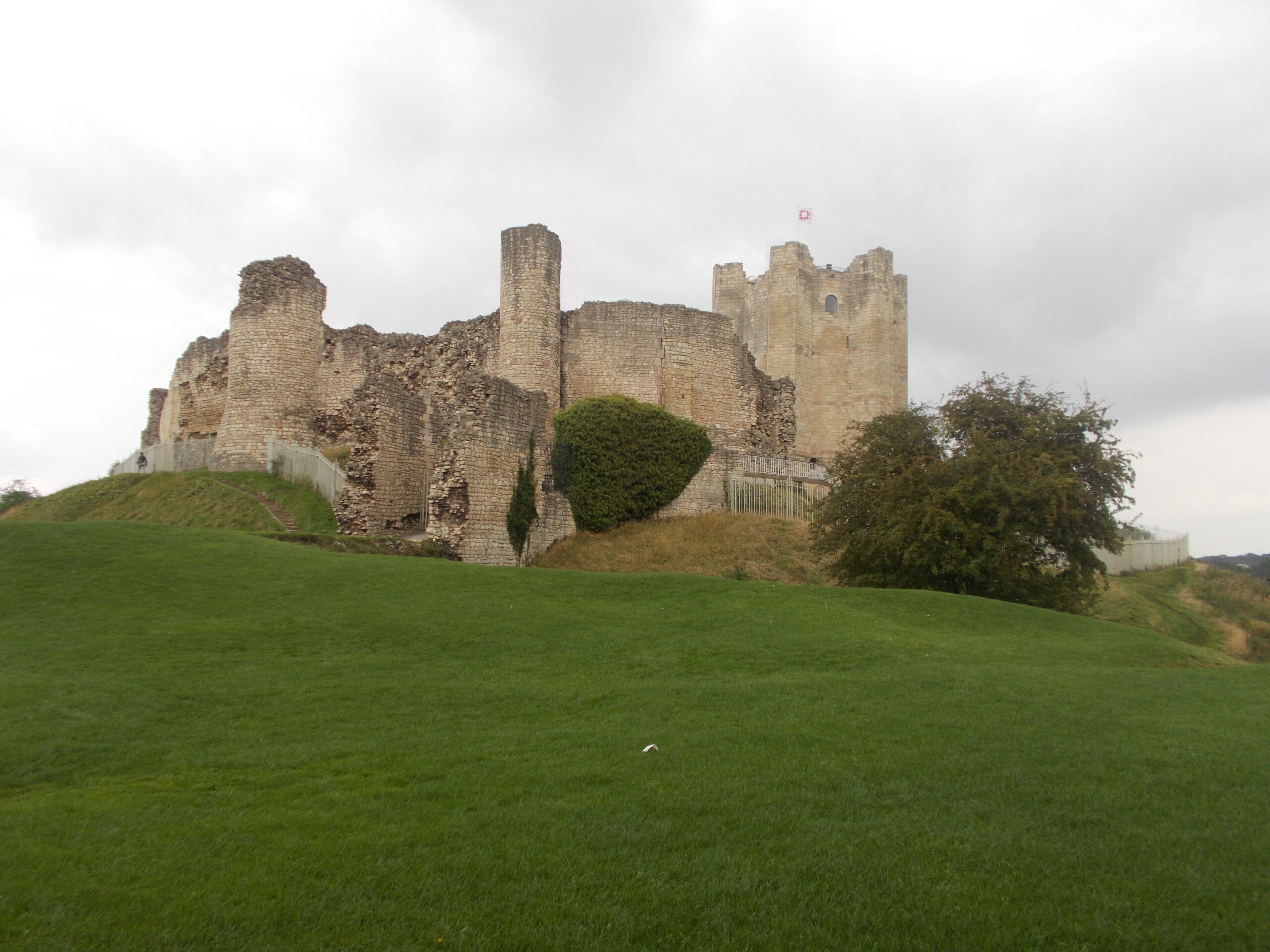
Conisbrough Castle, South Yorkshire, possible birthplace of Richard, Duke of York.
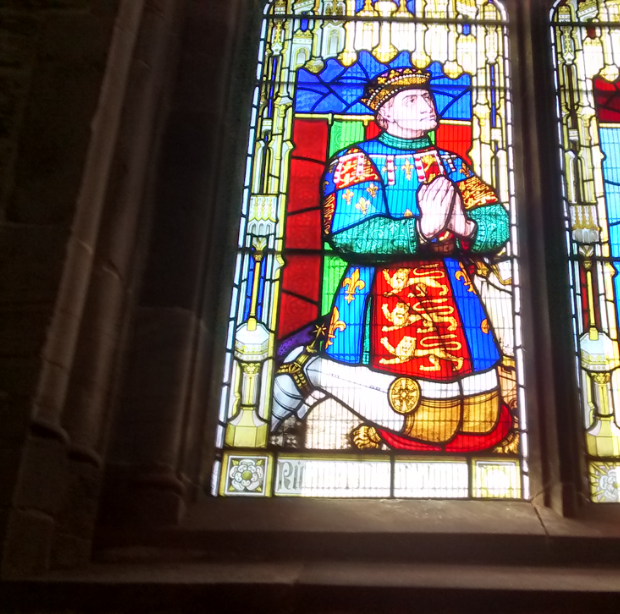
Window in St Laurence's Church, Ludlow, depicting Richard, Duke of York.
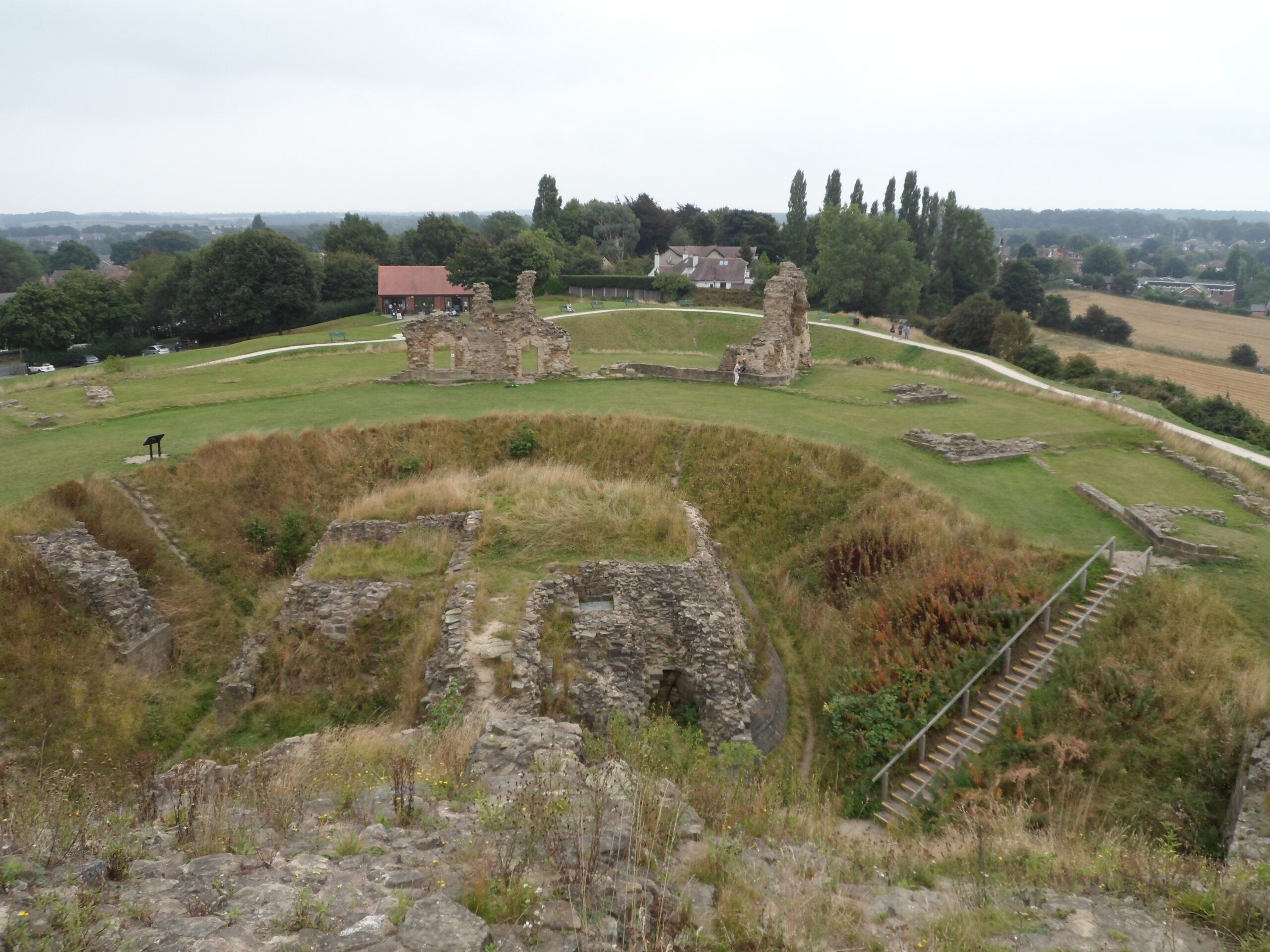
The remains of Sandal Castle, from where Richard, Duke of York, set out to confront Margaret of Anjou's troops in December 1460