
His Life & Death
The Anglo-Scottish War 1482
by Sandra Pendlington
This research is a culmination of work done by members of the Scottish Branch of the Richard III Society over several years. As far as we know, it is the first account that deals solely with the war and differs from the accounts given in histories and biographies of Richard III in some important ways. There is a paucity of contemporary records and even fewer exact timings, therefore interpretation has been needed to achieve a complete account. Members of the Branch live in the area where the actions took place and have knowledge of the terrain, which is important when deciding what was feasible.
To help readers we have included a ‘Who’s Who?’ in this section.
The research about the events of 1480 to 1482 is in three parts. Each part consists of the story of the events, illustrated by photographs and maps. There are also research notes that explain how and why our interpretations that differ from other interpretations have been reached and gives ideas for further reading, references, and acknowledgements.
Part 1 tells the story of the beginning of the war, a large raid in southeast Scotland led by Richard, Duke of Gloucester, and Henry Percy, Earl of Northumberland in 1480 and a naval raid by the English fleet in the Firth of Forth in 1481.
Part 2 is about a lightning raid led by Richard, Duke of Gloucester, on Dumfries in southwest Scotland in May 1482.
Part 3 tells the story of the invasion of southeast Scotland by a large English army, led by Richard, Duke of Gloucester, in July and August 1482.
All photographs, except where acknowledged, and maps belong to the Scottish Branch of the Richard III Society and permission must be sought to use them in any other work, printed or online.

The Richard III Tower, Carlisle Castle, built to increase the defences in the 1470s. Photo by Sandra Pendlington.
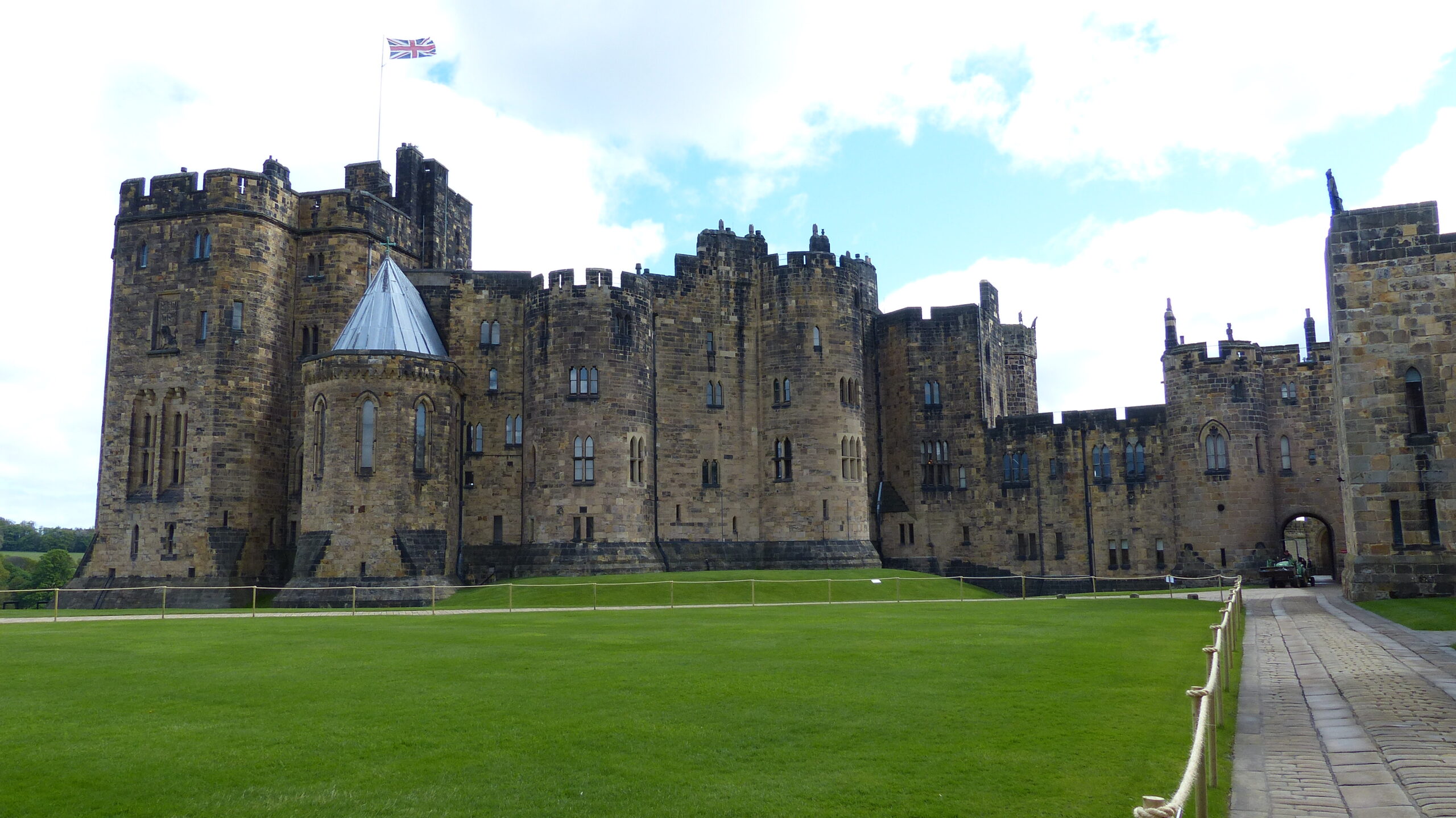
Alnwick Castle. Photo by R Scott-Buccleuch.