Ricardian Places
Nottingham
Richard spent a large part of his reign in Nottingham and made improvements to the castle, as did his brother Edward IV, and indeed it was here that Edward proclaimed himself king in 1471, when he returned from exile as a result of Henry VI’s readeption. Sometimes known as Richard’s ‘Castle of care’, it was while staying here in 1484 that Richard and Anne heard of the death of their only son, Edward of Middleham. It is also from Nottingham Castle that Richard left on 19th August 1485 on his way to Leicester and then Bosworth and his death on 22nd August. The original castle was largely demolished in 1649 and a ducal mansion now stands in its place. The gatehouse and some other medieval architecture, such as sections of the curtain wall in the outer bailey, survive. There is also nearby access to the extensive cave system existing underneath the city centre, including the famous ‘Mortimer’s Hole’, the cave tunnel into the castle which was believed to be the route taken by knights loyal to Edward III when they seized Roger Mortimer, 1st Earl of March in 1330.
A small section of the original Trent Bridge which Richard would have travelled over when he left Nottingham survives and is located in the middle of a roundabout just past the existing Trent Bridge. It is possible to walk over this section.
Situated 6 miles north of Nottingham city centre, Bestwood Lodge is a former royal hunting lodge, where Richard stayed in August 1485. It was while staying here that he heard of Henry Tudor’s invasion. The original building has been replaced by a Victorian mansion but still sits in woodland, forming a country park. Now a hotel, the building has a plaque provided by the Richard III Society, commemorating Richard’s stay. The plaque was unveiled in August 2019, 534 years to the day since Richard left Nottingham for the final time.
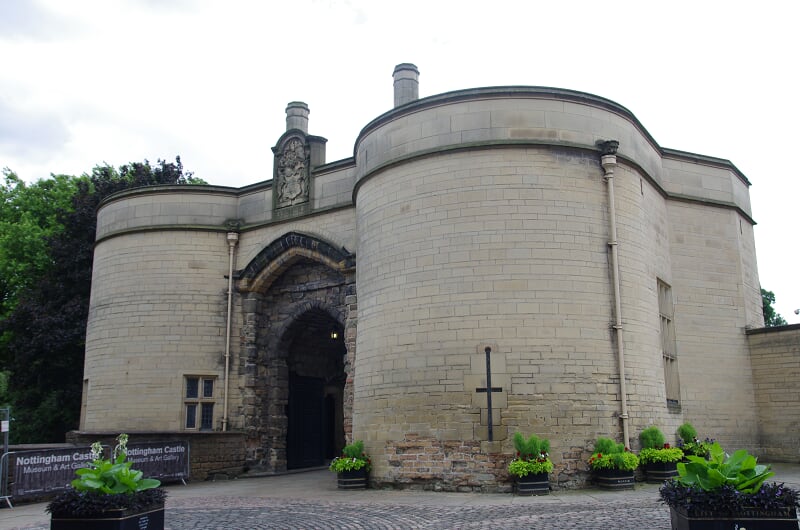
Nottingham Castle Gatehouse
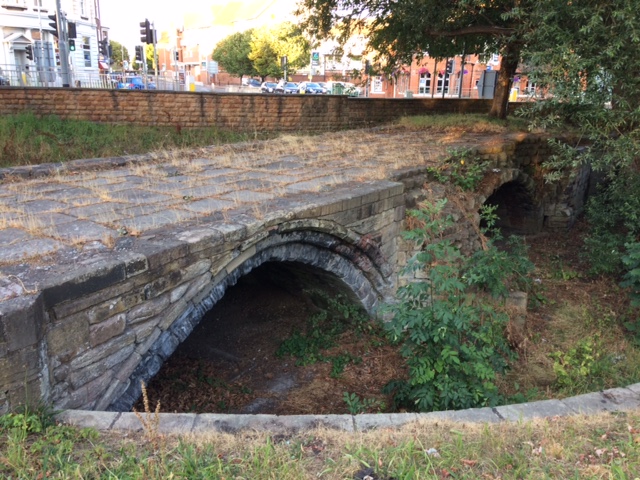
The remains of the old Trent Bridge (photo courtesy of Amanda Geary)
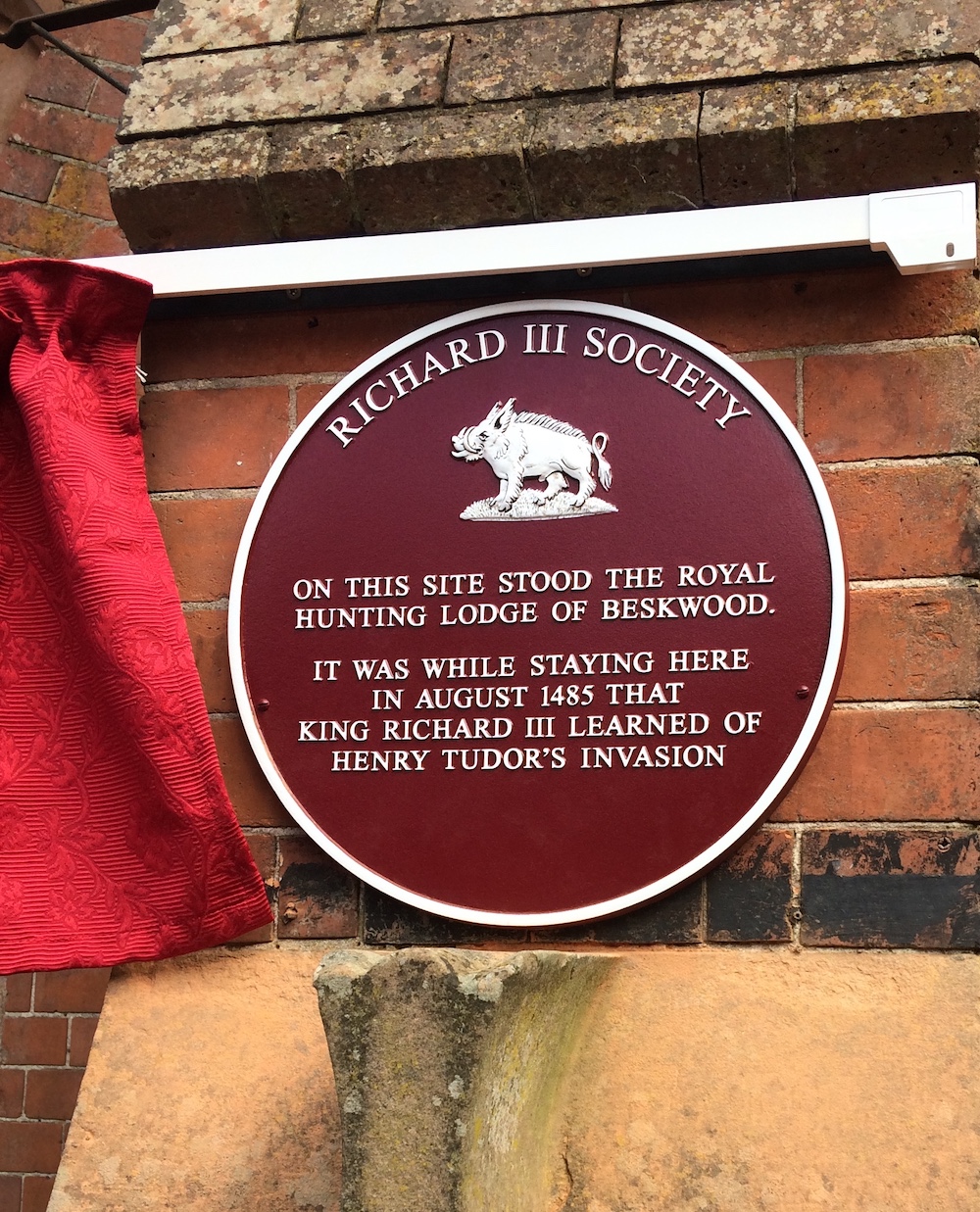
Society plaque commemorating Richard's stay at Bestwood (originally Beskwood) Lodge