
Richard’s Family
Margaret, Duchess of Burgundy (Sister)
by J L Laynesmith
Margaret, Duchess of Burgundy, was the youngest of Richard III’s surviving sisters. She was born on 3rd May 1446, the sixth child and third daughter of Richard, Duke of York and Cecily Neville. It is often reported that she was born at Fotheringhay but, according to a note in her sister Anne’s Book of Hours, it was really at Waltham Abbey. She spent her early childhood in her mother’s household with her youngest brothers, George and Richard. When the boys were sent abroad for safety after their father’s death, early in 1461, Margaret remained at Baynard’s Castle with Duchess Cecily.
The King’s Sister
Margaret was the only sister not yet married when Edward IV became king and this gave her a very privileged position at court. She enjoyed a prominent role at Elizabeth Woodville’s coronation and afterwards was very often in the Queen’s company. The King considered marrying her to James III of Scotland and later began arrangements for her to marry Don Pedro of Portugal. Then, in 1465, the Duke of Burgundy’s heir, Charles, Count of Charolais, was widowed. Politically and economically Burgundy was a more attractive ally and Edward swiftly revised his plans for his sister. The Earl of Warwick favoured an alliance with France and was vehemently against this change in foreign policy (indeed some contemporaries believed that this was the principal reason for Warwick’s eventual rebellion against Edward). Margaret’s marriage to Charles was agreed in 1468, by which time Charles had become Duke. Only half of her £41,666 dowry was ever paid. The wedding in July 1468 was extraordinarily spectacular with tournaments and pageants on the theme of the Golden Tree.
Patron and Politician
Margaret shared religious and cultural interests with her mother-in-law, Isabelle of Portugal, and was close to her step-daughter Marie. Nearly thirty of her manuscript books have survived, some exquisitely illustrated: a ‘Dialogue between the Duchess of Burgundy and Jesus Christ’ and a leaf from a gradual that she gave to the Greyfriars at Greenwich can be seen on the British Library’s website and ‘Blessed are the Merciful’ has been digitised by the Royal Library of Belgium. She was also a patron of William Caxton who later brought his printing press to England.
In 1470, when Henry VI returned to the English throne, Edward IV and his brother Richard sought sanctuary and support in Burgundy. Duke Charles at first kept them at a distance from his court, while trying to persuade the new Lancastrian regime not to ally with the French against him. Margaret nonetheless corresponded with the Yorkist exiles. On 3rd December 1470 Louis XI of France declared war on Burgundy. Around New Year Edward IV left Bruges to stay with the Dowager Duchess of Burgundy at Aire, and it was here that Margaret and her husband finally met him in early January to offer support in reclaiming his throne. The following month Margaret and her step daughter were in Lille and her brother Richard came to join them. Brother and sister travelled together to Ghent, via Courtrai and Peteghem, presumably discussing further strategy as they went. Margaret was busy raising funds for her brothers while the Duke of Burgundy took his armies to face the French. Margaret was also active in successful negotiations to persuade George, Duke of Clarence to switch sides.
Margaret spent surprisingly little time in her husband’s company and bore no children, but she worked hard in the Duke’s interests. She travelled extensively about the duchy and negotiated on his behalf with foreign ambassadors as well as his own people. In 1475 it was she, rather than Charles, who met her brother Edward IV when he arrived to invade France. After Duke Charles was killed in battle in 1477, Margaret was very active in supporting her step-daughter Marie, Duchess of Burgundy, and in arranging Marie’s marriage to Maximilian, King of the Romans. Marie died in 1482 leaving a five-year-old heir, Philip the Fair, who Margaret now brought up.
Ally of Pretenders
Margaret only returned to England once, in 1480, to seek military aid against France. In 1485 she refused to recognise Henry VII’s accession and paid for 2,000 mercenaries to support ‘Lambert Simnel’. After the Battle of Stoke her position mellowed, prompted by shared English and Burgundian concerns over France’s ambitions in Brittany. Then the Anglo-French peace treaty of November 1492 gave Margaret cause and opportunity to oppose Henry VII once more: the French abandoned the pretender ‘Perkin Warbeck’ who now sought support from Margaret. She wrote a letter assuring Isabel of Castile that the boy was her nephew, Richard, Duke of York, and later wrote to the Pope on his behalf, as well as providing funds for his invasion of England. She finally made peace with Henry VII in September 1498.
Margaret died on 23rd November 1503 and was buried at the house of the Observant Franciscans in Mechelen.
Further Reading
C Weightman, Margaret of York, Duchess of Burgundy, 1446-1503 (1989)
H Schnitker, Margaret of York, Princess of England, Duchess of Burgundy, 1446-1503 (2016)

Margaret of York before the resurrected Christ
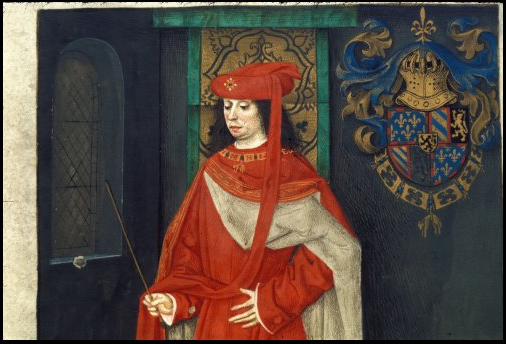
Charles the Bold
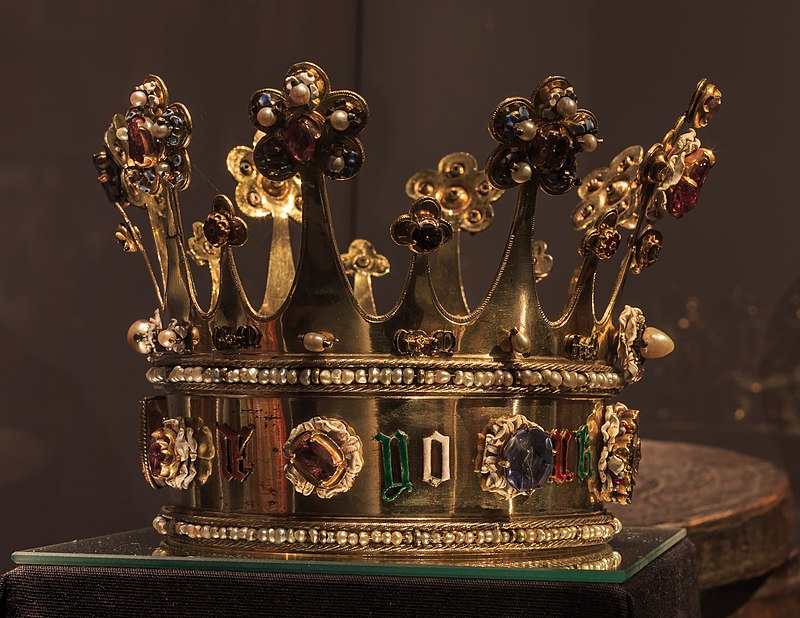
Margaret's crown

Mary of Burgundy
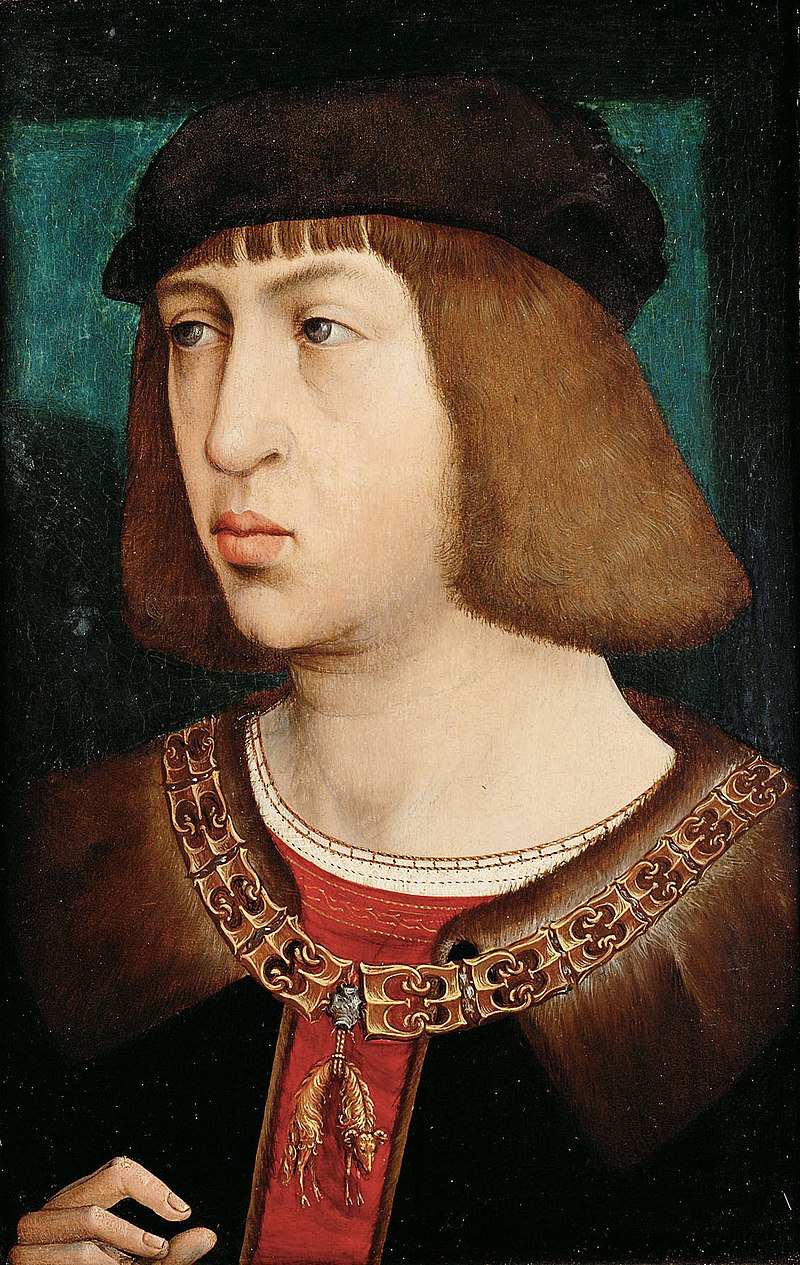
Philip I of Castile