
Richard’s Family
Anne, Duchess of Exeter (Sister)
by J L Laynesmith and Marie Barnfield
Anne, Duchess of Exeter is probably best known as the big sister whose descendants carried the mtDNA with which Richard III’s bones were identified. Anne’s own story was remarkable and tragic. She was the eldest of the family, born at Fotheringhay Castle on 11th August 1439.
Childhood and Marriage
Anne’s parents moved to Rouen when she was two. She was six and a half when they returned and, on 30th January 1446, married her to Henry Holland. Henry was the heir to the Duke of Exeter and almost ten years older than Anne. Yet the marriage made good political sense. At the time, both the King, Henry VI, and his heir, Humphrey, Duke of Gloucester, were childless and it was not at all clear who should inherit the throne after them. The Hollands were descendants of Henry IV’s eldest sister which made them the King’s closest relatives on his father’s side. Like the Duke of York himself, they had a claim to be next in line to the throne. This meant that Anne might one day be Queen.
Anne may have moved into the household of the Duke of Exeter and his wife, Anne Montagu, but in the summer of 1447 Exeter fell ill and was obviously dying. Anne’s father, the Duke of York, was given guardianship of her teenage husband. On 23rd July 1450, when he was still only twenty, Anne’s husband was allowed to take possession of his inheritance and could now set up a household of his own. However, Anne was not quite eleven and very likely remained with her parents for another couple of years at least. Her marriage contract had provided that Anne could withdraw from the commitment before she reached the age of fourteen, at which time the marriage was presumably to have been consummated.
The young Duke of Exeter quickly started trying to improve his comparatively meagre holdings by violence and intimidation. But as Anne reached her fourteenth birthday her father was very much out of political favour and she chose, or was persuaded, not to invoke the ‘get-out’ clause of her marriage contract. She was invited to attend the queen’s churching as Duchess of Exeter in the autumn of 1453. The following year, her father was appointed Protector which infuriated Exeter because he believed that the honour should have gone to him. Exeter duly launched a rebellion. When this failed, he took sanctuary at Westminster Abbey. The Duke of York controversially removed him from the sanctuary and imprisoned him at Pontefract Castle. Anne was still only fifteen. Disappointingly her whereabouts at this time seem impossible to trace.
Quite early in her marriage, Anne acquired a couple of Books of Hours that still survive. One is now at Sidney Sussex College, Cambridge (MS 37) and includes an image of Anne kneeling before the virgin. Another is now in Rennes and has been fully digitised here.
Anne can have seen little of Exeter in the mid 1450s because, although he was released in March 1455, he was imprisoned again in June after York’s victory at St Albans. Exeter was freed at the end of York’s second protectorate, but he does not seem to have been much liked by York’s opponents either. Over the winter of 1458/9 he was imprisoned at the king’s will for attempting to capture the Earl of Warwick. Nonetheless, after the Duke of York was attainted in 1459, the Duke of Exeter was made constable of Anne’s birthplace, Fotheringhay Castle. He was also Constable of the Tower. Anne was at the Tower in the summer of 1460 when Lancastrian loyalists fled there to take refuge against her triumphant brother, Edward and their cousin, the Earl of Warwick. Exeter fought against his wife’s family at St Albans and Towton and then accompanied Henry VI to Scotland when Edward IV took control of the country.
Sister to the King
As the wife of an exiled traitor, Anne was now at risk of financial ruin. She probably travelled north to beg her brother in person to protect her interests. On 1st May, less than a month after Towton, Edward was at Newcastle. Here he made a grant, at Anne’s request, transferring a collection of Exeter’s estates into the guardianship of men he trusted so that their income could provide for her. These properties included an elegant London home, Coldharbour. By the following year, Anne had persuaded Edward that she was loyal to him, so he gave her the entirety of her husband’s estates to hold for her lifetime. She was now one of the most influential women in England.
At some point in the turmoil of her marriage, Anne had given birth to a daughter, also called Anne. She was determined to protect her daughter’s interests and looked for a husband who was likely to be able to ensure that the younger Anne could claim the Exeter inheritance in turn. It is possible that her first choice was Henry Duke of Buckingham since Edward IV had placed Buckingham and his younger brother in Anne’s household in February 1464. However, by the following summer the boys had been moved into the Queen’s household to grow up with the sons of Elizabeth’s previous marriage. In February 1466 Buckingham married the Queen’s little sister Katherine and at Greenwich the following October nuptials were celebrated between young Anne Holland and the Queen’s eldest son from her first marriage, Thomas Grey. The Queen had apparently sweetened the deal with a payment of 4,000 marks to Duchess Anne, as well she might since Thomas was now on course to acquire the estates of the Dukes of Exeter. One source close to the Earl of Warwick recorded that there had previously been discussion about the younger Anne Holland marrying Warwick’s nephew (and heir male) but it is impossible to know how significant these had been, or if they were more a case of Warwick’s wishful thinking at a time when he also hoped one of his daughters might marry Buckingham.
In January 1470 Duchess Anne initiated divorce proceedings against her estranged husband. Her brother George, Duke of Clarence, hosted the initial legal discussion but his rebellion soon after delayed the business. To Anne’s understandable dismay, her husband was suddenly restored to a position of power with Henry VI’s readeption that October. Anne joined her mother and sisters in trying to persuade George to abandon the Lancastrian cause and help reinstate Edward IV. The Yorkists regained power in the spring of 1471. The Duke of Exeter, having been left for dead on the field at Barnet, took sanctuary at Westminster. In May, Edward had him moved to the Tower of London and the following month Anne’s divorce proceedings resumed. It was eventually determined that the dispensation acquired for her wedding had been defective so her marriage was annulled. Anne was now free to choose a husband of her own, although her daughter remained Exeter’s legitimate heir. Sadly the younger Anne died some time before 1474.
Duchess Anne’s second husband was Thomas St Leger, one of the King’s esquires. The date of their marriage is unknown but it was perhaps as late as 1475. In that year Edward took the Duke of Exeter with him when he invaded France, probably to ensure that if there was rebellion in his absence Exeter could not be set up as king. St Leger was one of the principal negotiators of the peace that followed and Exeter himself mysteriously drowned on the return journey. That winter Duchess Anne gave birth to another daughter, again called Anne. A few weeks later, the Duchess died, probably as a result of complications from the pregnancy. She was buried in St George’s Chapel at Windsor.
Aftermath
Her widower was made a Knight of the Bath at the festivities for the young Duke of York’s wedding in January 1477. Despite the lack of any blood connections to the Dukes of Exeter, his daughter Anne was promised half of the duchy estates and contracted to marry the Marquis of Dorset’s son. However, shortly afterwards, Edward IV died and Dorset fled into exile. In the autumn of 1483 Thomas St Leger joined Buckingham’s rebellion against Richard III. He was executed, ironically, at Exeter and buried beside Anne at Windsor. Early in Henry VII’s reign, the majority of the duchy of Exeter estates were granted to Lady Margaret Beaufort, the king’s mother. Anne St Leger was fourteen when she married George Manners of Belvoir and Helmsley (later Lord Roos). Her family eventually lost all knowledge of their illustrious heritage until John Ashdown-Hill traced her 13x great granddaughter, Joy Ibsen, in 2004.
Further Reading
See references under ‘Exeter’ in The Complete Peerage and further details in J L Laynesmith, Cecily, Duchess of York (2017)
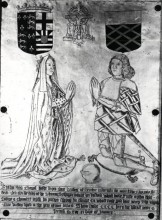
Anne of York and Thomas St Leger
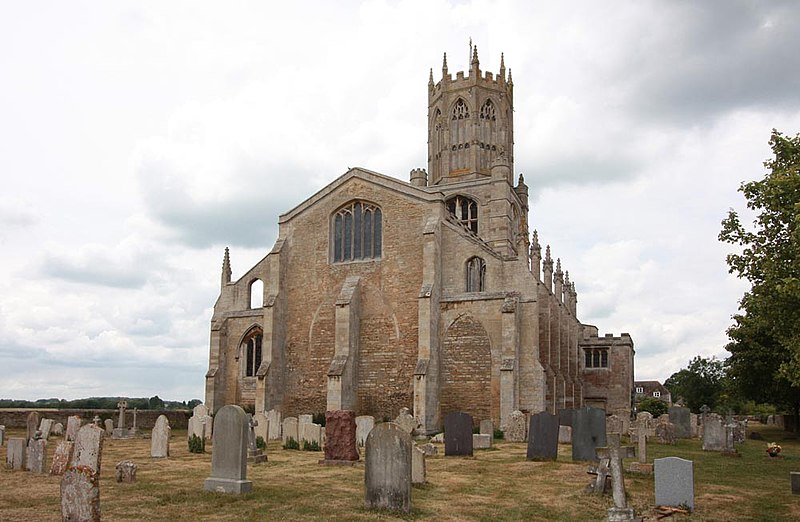
Anne was probably baptised at St Mary and All Saints Church, Fotheringhay
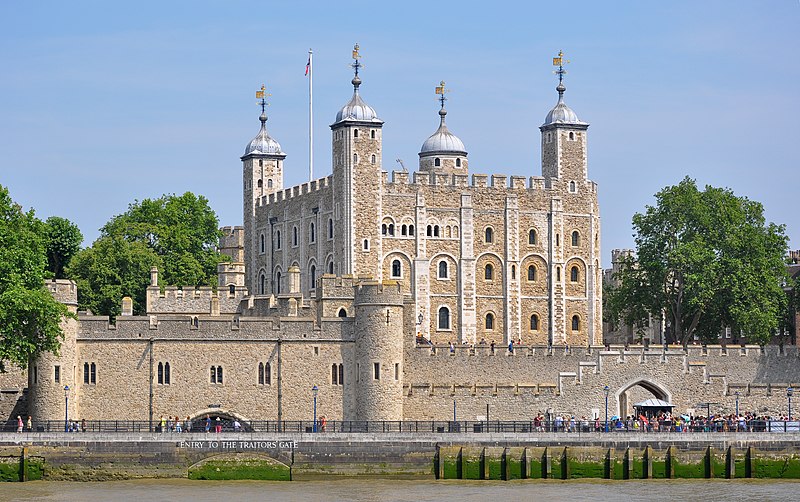
The Tower of London where Anne lived for some of the time that her husband was Constable
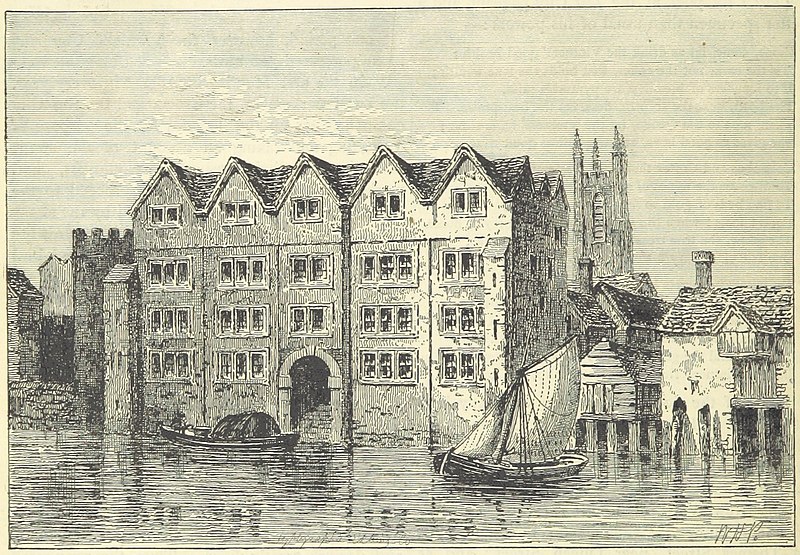
Anne's London home, Coldharbour
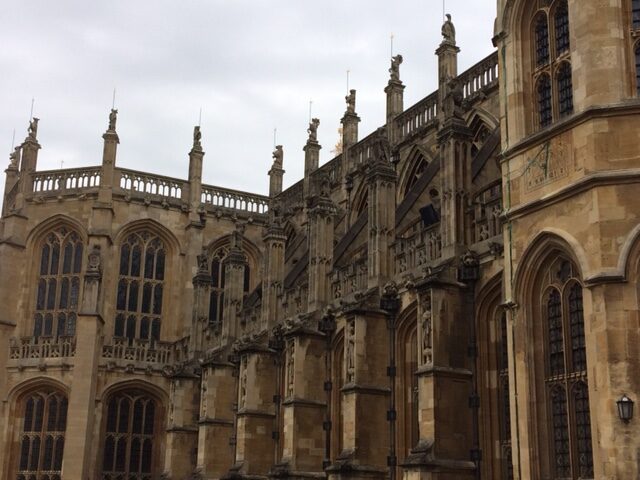
St George's Chapel, Windsor