
The Anglo-Scottish War 1482
The War Begins
by Sandra Pendlington
Richard III was King of England for only two years, but he enjoyed a much longer career as Duke of Gloucester. In the 1470s Richard became established as the greatest man in northern England, and this provides the context for most interpretations of his adult life before 1483. With this being the case, it seems surprising that Richard’s relations with England’s northern neighbour have been comparatively neglected (from a paper by David Santiuste).

The six Northern Marches in 1480 (S Pendlington)
In August 1470, Richard replaced Richard Neville, Earl of Warwick (‘the Kingmaker’) as Constable of Carlisle Castle and Warden of the West March towards Scotland. The English West March was mainly in the county of Cumberland and faced the Scottish West March which was mainly in the county of Dumfriesshire. Henry Percy was Warden of the English Middle and East Marches towards Scotland.
It was the first of many appointments Edward IV made that cemented his brother’s influence in the North of England. The rebellion against Edward IV by Warwick and George, Duke of Clarence, meant that Richard did not take up his duties in the West March until after the Battle of Tewkesbury in May 1471.
The West March was Lancastrian in affiliation and the situation on the border was unstable. Damage inflicted by the Scots on the English defences needed repairing. Raiding by the Scots was an ever-present problem that killed people, stole or slaughtered their animals and destroyed property. It was particularly severe in Richard’s West March in an area known as the debatable lands, where the border between Scotland and England was not observed by the local families. Richard was 18 years old when he came north. For such a young prince the task before him was immense.
As Warden of the West March, Richard was required to ensure the safety of his people and he also had to maintain peace across the border with Scotland. He strengthened the defences by repairing Penrith Castle and building a new tower at Carlisle to strengthen the curtain wall.
As well as repairing defensive positions, it is likely that Richard employed the usual tactics to discourage cross border raiding into Cumberland. If the Scots raided his West March, then Richard ordered a reprisal on Dumfriesshire. Historians see this as aggression by a northern war lord, but the situation on the Scottish/English border, particularly in the debatable lands, was volatile and Richard could not allow the Scots to raid without some reply.
Over time the local nobility and gentry who had supported the Lancastrian kings became his supporters. His position as the King’s brother would have helped but Richard’s administration of the March, which was firm and just, probably drew these men to his cause.
England and Scotland endured a fractious relationship in the Middle Ages (the two kingdoms were officially at war between 1333 and 1502), but there were extensive periods of truce. The 1470s was one such period, as James III, King of Scots, and Edward IV of England both recognised the benefits of peace. For James, peace with the ‘auld enemy’ confirmed his kingdom’s restoration to its ancient boundaries, including Berwick-upon-Tweed, which the Lancastrians had surrendered to the Scots in 1461. From Edward’s point of view, a quiet northern border would give him a free hand to pursue his ambitions on the continent.
In the 1474 Treaty of Edinburgh, the two Kings agreed to the renewal of an unusually long truce, which was supposed to last until 1519. This was to be accompanied in time by a marriage between the Scottish heir, James, Duke of Rothesay, and Edward’s daughter Cecily. One aspect of the treaty was a tightening of arrangements by the Wardens to ensure that meetings of the Wardens were held regularly and those who broke the truce were punished. Richard faced several different Wardens during his time in the West March, including the brother of James III, Alexander, Duke of Albany. The Kings who agreed the truce were in Edinburgh and London, far removed from the situation on the border, and it is not surprising that the peace policy was controversial in the marches. Border lords on both sides saw Anglo-Scottish warfare as a natural aspect of their lives.
The raiding did die down but by the end of the 1470s the peace was breaking down. The Scots were particularly vexed by the problem of English piracy, and the failure of the English crown to make effective reparations. However, there were also some shocking breaches of the truce from the Scottish side – notably in 1479, when an English border official was killed at a cross-border meeting in the West March. This almost certainly occurred with the connivance of Albany.
Some of Albany’s supporters were accused of rebelling against the King and Albany was accused of supporting them. The records of the Scottish parliament say that Albany had:
‘violated the treaty and violently broken the truce between ourself and the most excellent prince, our brother and cousin Edward, king of England in treasonably killing, plundering and robbing of the English.’
Albany was ordered to attend the Scottish parliament in July to answer to the charges. Albany failed to do so and instead escaped to France. A French chronicler reported his arrival in France:
‘In this year of 1479 there arrived in France a young prince of the kingdom of Scotland named the Duke of Albanie, brother of the King of Scotland, who had been chased out of the said kingdom by the said king; he came to the King for refuge, who had him shown great honour in the entry he made into Paris…’ (Mandrot, Cronique Scandaleuse, vol 2, pp 89-90).
In 1480, Edward IV’s patience appears to have snapped; early in the year he sent an embassy to Scotland, demanding homage, the return of Berwick, Roxburgh and Coldingham and the delivery of James’s heir (to ensure that the projected marriage would still proceed). Unsurprisingly, none of Edward’s demands were met, and war became inevitable.
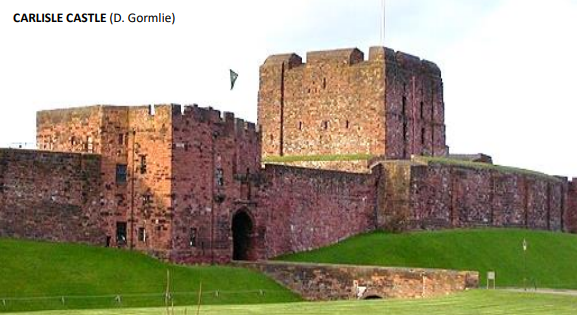
Carlisle Castle (D Gormlie)
June 1480: The Angus Raid
Despite Edward IV’s demands not being met, war was not declared immediately but he did make some naval preparations. John, Lord Howard was instructed to sail to Scotland, presumably to provide an English presence off the coast of Northumberland and southeast Scotland. On 12th May Edward appointed Richard his Lieutenant General in the north to confront James III, King of Scots, for his breaking of the truce. Richard now had responsibility not only for his own West March but also the Middle and East Marches where Henry Percy was the Warden.
In mid-June Edward IV wrote to Richard, Henry Percy and 51 knights in Northumberland, Cumberland, Westmorland and the North and West Ridings of Yorkshire informing them of an attack on Northumberland.
‘Whereas lately certain Scots…have entered our realm of England in hostile fashion, burning villages and dwellings of our lieges in our marches there, and taking certain of our lieges prisoner from them, and killing and spoiling certain of them, and inflicting many other ills upon them…’ (Foedera, vol 12, pp 117-8, from Barnfield 1480 diary).
Edward went on to instruct them to prepare to defend their areas in case the Scots attacked again.
The attack in Edward’s letter was a large raid led by the Scottish border lord, Archibald Douglas, Earl of Angus, who led his men into Northumberland, burning settlements as they went. Lasting three days, the Scots went as far south as Bamburgh, where the castle was attacked.
The reason for the Angus raid is complex and shows the European influence on Scottish – English relations at the time. Edward IV had formed an alliance with Burgundy and an invasion of France was possible but the French King, Louis XI, was anxious to avoid war with England. In a letter to the Duke of Milan in October 1480, Visconti, the Milanese ambassador to France wrote ‘the Scots have attacked the English, and I think it has to do with the King here’ (Macdougall, p 176). Visconti goes on to say that he has seen a letter from James of Scotland, indicating that the French King asked the Scots to attack Bamburgh. This is possible – Louis would be in favour of open war between England and Scotland to distract Edward IV from any invasion of France. However, James III would have known that this would almost certainly lead to open warfare, something that he seems to have wanted to avoid. Another explanation could be that it was Albany, who was at the court of Louis XI, who told Angus to raid Bamburgh. Angus was one of Albany’s adherents and one of the border lords who opposed James III.
Bamburgh was the territory of Henry Percy and, not surprisingly, the Angus raid resulted in an English reprisal into south east Scotland. On 20th June Edward IV wrote to Richard, Northumberland and other knights instructing them to begin to call the northern nobility to arms. One of those called was Francis Lovell, Richard’s boyhood friend, who wrote to William Stonor saying that ‘it is said in this country the King purposes to send northwards my Lord of Gloucester and my brother Parr…trusting we shall have war of the Scots.’ (Stonor, vol 2, no 318, in Barnfield 1480).
There was no doubt that Henry Percy would personally punish Angus for this raid which caused such damage to his lands.
August 1480: Reprisal
The English response to Angus’s June raid eventually came in August 1480 – a large double-pronged raid by Richard into Berwickshire and Henry Percy into Angus’s territory in Roxburghshire. (See Research Note).

Routes used by the English Army in 1480
Invasions by the English into Scotland and vice versa did not always use the Great North Road (A1). There were other well established routes. Inglis’s ‘The Road to Edinburgh’ describes a chronicle written by Harding, a Northumbrian who had been a spy for Henry VI in 1427. Harding was employed to suggest which route the King should follow and he advised the King to head for Wark. This was a common route used by Scottish armies in the opposite direction and was almost certainly the one used by Richard’s division in 1480 and in the main invasion two years later.
Richard’s division travelled north from Alnwick via Wooller (A697 today). In order to cross the border into Berwickshire, Richard had to cross the River Tweed and the only bridge was at Berwick-upon-Tweed, which was in Scottish hands and not viable for such a raid. There was no bridge at Wark, but the Tweed was, and still is, fordable at that point. The fords are overlooked by the 12th century castle, which in 1480 was in the hands of the English with Sir Thomas Grey in command.
Richard and his men then rode to Hutton Field where a knighting ceremony was carried out on 22nd August. Among the men knighted were Francis Lovell and two Yorkshire men who were to play an important part in the later invasion – Richard, Lord Fitzhugh of Ravensworth, and Sir John Neville of Liversidge near Wakefield.
Henry Percy’s target was Jedburgh, the main seat of the Earl of Angus, which is southwest of Wark. Fifteen wagons loaded with weapons and victuals made the journey (Percy p.65). Percy and his men began the journey north on the same route as Richard. Then just after Wooller, they turned left (B6351 today) on an old road that took them round the hill, Yeavering Bell, and along the valley of Bowmont Water, crossing the border into Scotland at the twin settlements of Kirk and Town Yetholm.
From there is was 8 miles cross country to Jedburgh. They also took artillery to besiege Jedburgh and during the bombardment one of Northumberland’s men was injured when a cannon exploded. He was treated by the French surgeon travelling with the army (Percy p.65). Other than this attack on Jedburgh, there are no records of attacks on other settlements. On their return they halted on Cessford Moor on 22nd August, where Percy knighted several men in recognition of their service. (See research notes for parts 1 and 3 for comments on dates of knightings).
The reason for Percy’s raid is clear – he attacked the main town of the man who attacked his town of Bamburgh. Richard’s reason is less clear, but it seems very likely that both Richard and Percy used the raid to reconnoitre the land in readiness for the invasion that was expected to take place in 1481.

Wark fords across the River Tweed (S Pendlington)

Bowmont Valley (S Pendlington)

Cessford Castle with Cessford Moor in the background (S Pendlington)
April1481: The Scots Prepare
The Scottish parliament met and put in place measures to deal with the situation. On the 4th April they summoned the lords to be ready to answer the King’s call to arms with just eight days warning or ‘quicker if need be’. They were ordered to equip themselves and bring enough supplies to last 20 days.
On 9th April orders went to all fortifications and towns in Scotland. The order made it clear that the whole of Scotland was to be prepared, especially those near the sea,
‘castles and strongholds as can be held and defended from our enemies of England, that each lord supply his own house and strengthen it with men, victuals and artillery, and to mend and repair them where necessary so that they can be held’. (Scottish parliament records).
Aberdeen, St Andrews, Dunbar Castle, Tantallon, Hailes, Dunglass, Home and Edrington in the east were specifically mentioned. Lochmaben Castle was the only castle in the West March mentioned. The Hermitage in the Scottish Middle March received special attention ‘and in particular the Hermitage, which is in most danger’. (Scottish parliament records).
Dunbar and Lochmaben belonged to Albany. That could have been the reason for singling out Lochmaben in the west. The Hermitage was strategically situated, defending the road north from Liddesdale, one of the few routes into the Scottish Middle March.
Whether these preparations were to defend Scotland from an English invasion or preparations to invade England is not clear. One city that was not mentioned was Edinburgh. Presumably, with the army arriving from the north and the Scottish fleet in the Firth of Forth, it was not seen as necessary. What happened next surprised the Scots.
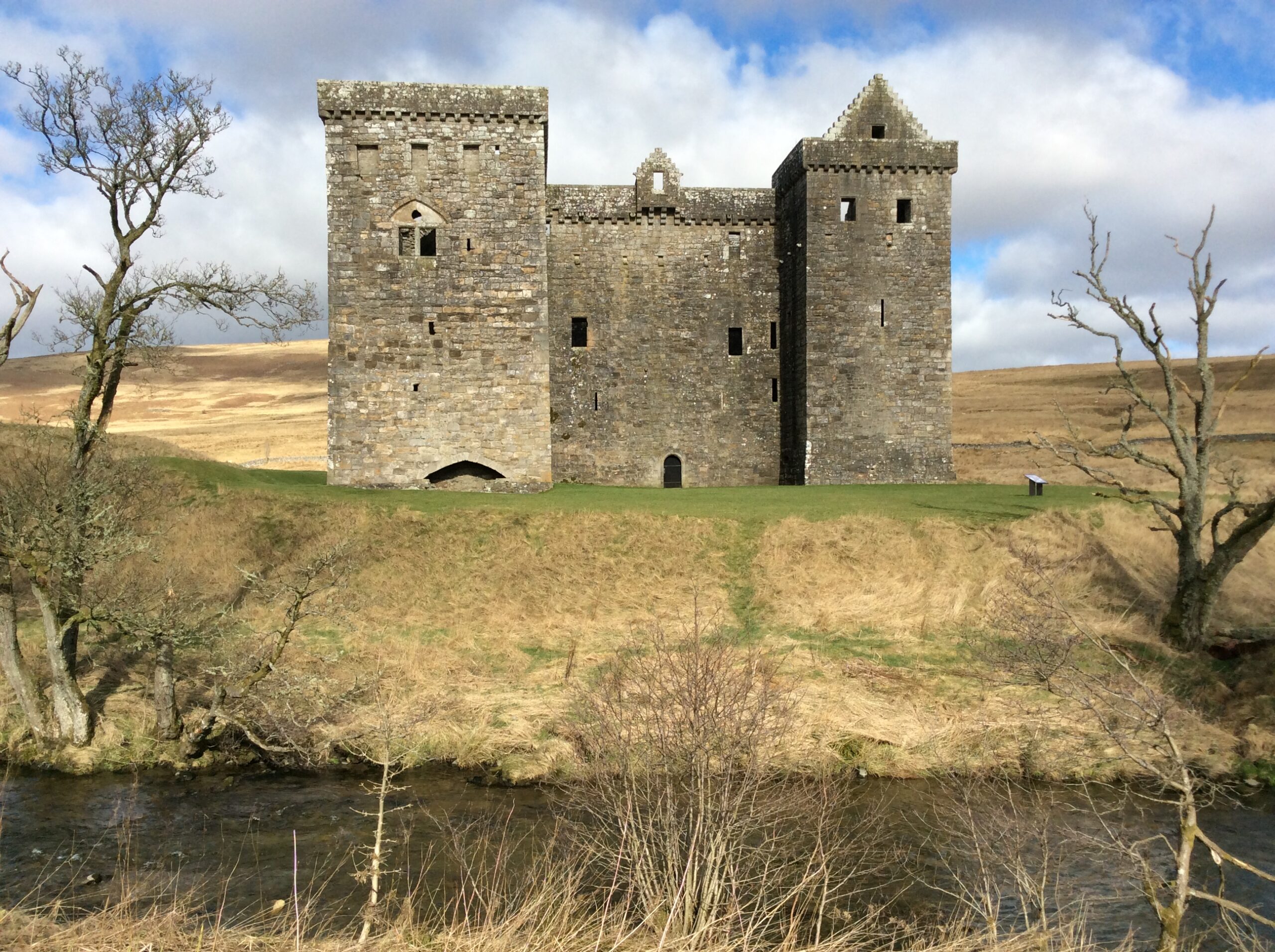
Hermitage Castle (S Pendlington)
June 1481: Attack on the Firth of Forth
During his reign, Edward IV added ships to the crown navy, buying vessels and building new ones and the navy was to play a part in the war with Scotland. Sean Cunningham, historian at the National Archives, described what happened. In February Edward IV ordered the masters of 11 crown ships to patrol the coast. They included the Grace Dieu built for the navy in 1473 and the Mary Ashe, bought in Yarmouth for £200. Both were probably ‘Great Ships’ – the largest ships in the navy that carried cannon as well as archers and spearmen. English vessels patrolled the east coast to prevent the Scots interfering with English reinforcements reaching Newcastle by sea, and the west coast, where one of the captains was Richard Radcliffe. Edward also employed privateers such as Richard Cust and Robert Symonds who captured the Scottish ship ‘Katherine of Edinburgh’ in the Atlantic. Cunningham says that this dynamic campaign gave England dominance of the seas.

The English attack on the Firth of Forth, June 1481 (S Pendlington)
In June 1481, a squadron from the east coast fleet under the command of John, Lord Howard, sailed into the Firth of Forth and attacked the Scottish fleet. It was a daring amphibious raid with marines and sailors taking part. Howard’s squadron included 3000 men who were allocated £5,000 in wages.
The larger Scottish vessels were anchored close to Edinburgh at Kinghorn on the north shore and Leith, just 2 miles from Edinburgh Castle, on the south shore. Eight Scottish ships were captured. The fleet also sent boats about 20 miles upstream from Leith to burn the smaller ships at anchor beneath Blackness Castle. The Castle was also attacked and damaged. The two photographs show the view the English raiders would have had approaching Blackness and the view from Blackness along the Firth with the modern bridges, which are about 4 miles from Blackness.
The destruction of Scottish naval power so close to Edinburgh must have both worried and angered the Scots. The raid was part of the preparation for an intended invasion in southeast Scotland, to clear the seas from the Firth of Forth to Newcastle so that men and equipment could be moved north by sea without interference.
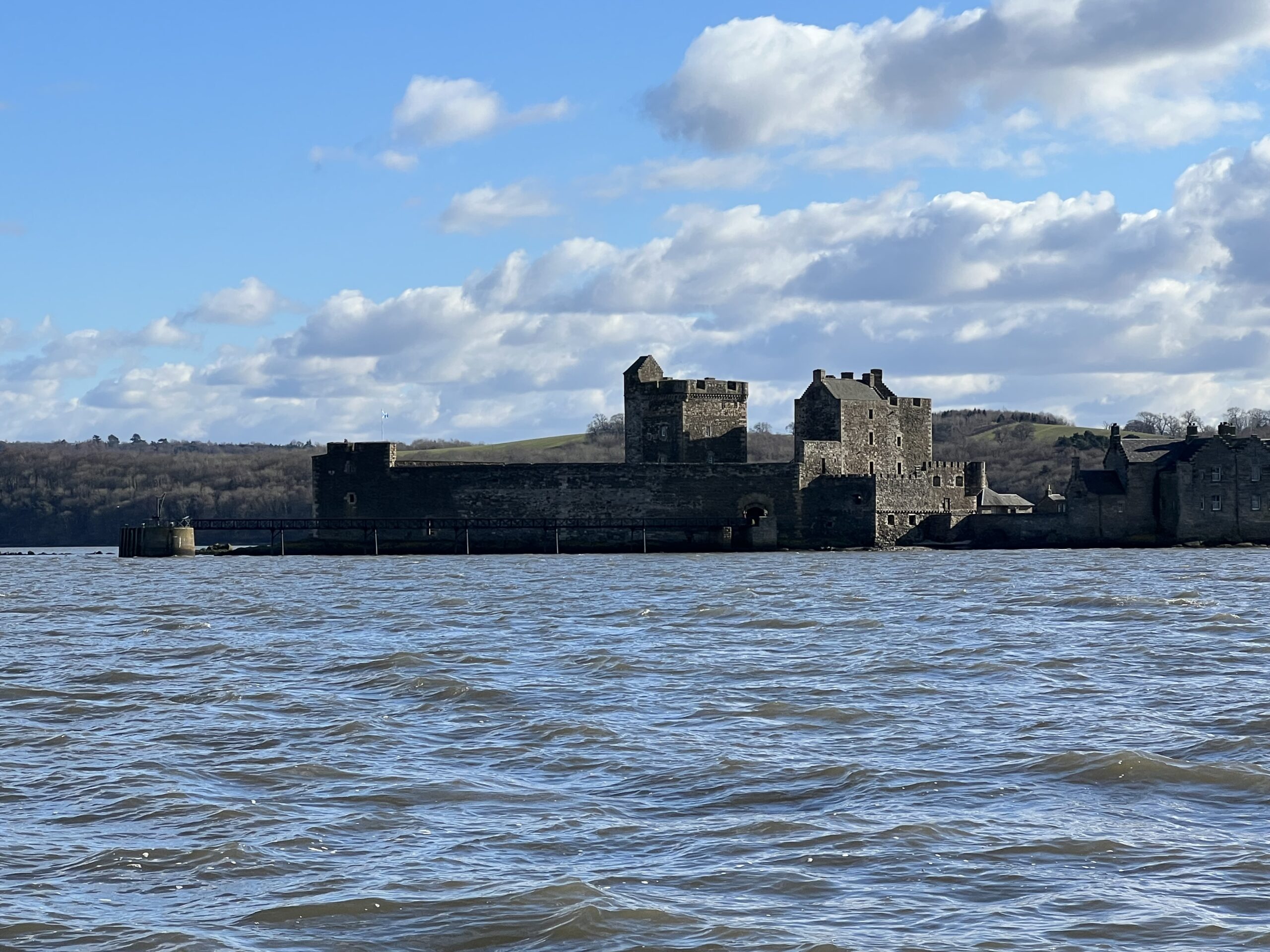
Blackness Castle from a boat in the Firth of Forth (S Potts)
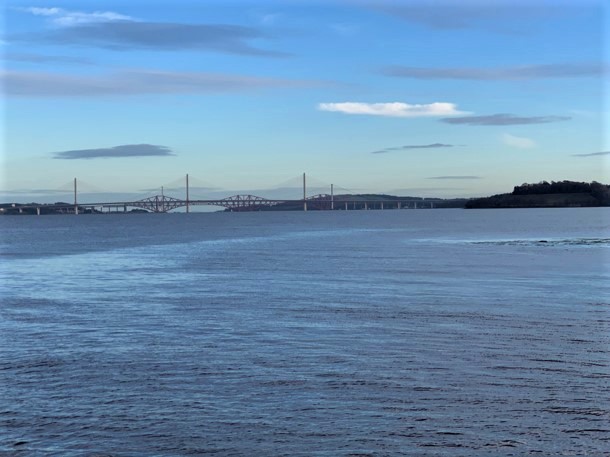
Firth of Forth from Blackness Castle looking toward the modern bridges (M Macleod)
The Expected Invasion
It is clear from the records that England was preparing for a conflict with the Scots in the summer of 1481, most likely an English invasion into Scotland but possibly to defend a Scottish invasion of England. The Coventry and York records describe preparations being made and men assembling. Coventry was concerned that men were being held ready but not leaving, probably because harvest time was approaching. They were asked to hold the men for another three weeks.
Some men were already on the road north. On 25th July two men, commanding a contingent of soldiers travelling north to Newcastle-upon-Tyne, appeared before the York Council asking for money. Since arriving in York, the men had been taking ‘stuff’ from the citizens. To remove the problem, the councillors agreed to help them. This is the last York record in 1481 about the projected Scottish venture. The Scottish army was also gathering.
Then something happened to halt the preparations. The most likely explanation is that Pope Sixtus IV intervened. The Scottish parliament records say:
‘When an army of all the great power of Scotland was gathered to travel in resistance to and for the invasion of our enemies of England, our sovereign lord, at the request and admonition of our holy father, the Pope’s bulls shown to him at the time, dispersed this great army in the hope and trust that his enemies would have in similar fashion been obedient to our holy father.’
Pope Sixtus IV ordered Cardinal Giuliano della Rovere, Bishop of Sabina, who was on an ambassadorial visit to Louis XI to approach the warring Kings. The Cardinal probably travelled first to England to see Edward IV who agreed and then to Scotland to see James III, who also agreed and sent the Scottish army home. The ‘truce’ did not involve any formal treaty and both Kings almost certainly knew that it was temporary.
Winter 1481 - 1482
Edward’s decision not to invade Scotland in 1481 caused problems for the two experienced commanders on the border – Richard and Henry Percy. Some of the English army had already arrived in the English East March and were besieging Berwick upon Tweed. The Scottish border lords and graynes (family groups who were later called reivers) did not abide by the truce and continued raiding the English Marches. People, property and livestock suffered. The raiding was so severe that Bewcastle, the major English fortress that countered the Hermitage, was almost destroyed, allowing the raiders from the debatable lands unhampered access to the English West March.
Richard and Henry Percy and their men were engaged in bloody fighting along the border throughout the winter. Weapons and equipment continued to arrive but food remained a problem. This was a time of hardship, with poor harvests across the north. To feed the soldiers and stop them taking food from the people, Richard purchased grains, peas and beans to stave off rebellion amongst the troops. In February 1482 Richard received £10,000 for wages for the army and Northumberland received a further 2,000 marks (about £1,340) for the defence of the East March (Cunningham, p. 190).
When spring came the war began again – this time the action was in the west.
The story continues in part 2 – ‘The Dumfries Raid’.