
FAQs
The Princes in the Tower
Were the 'Princes in the Tower' killed by order of Richard III?
These two princes were the sons of King Edward IV – the elder, Edward, aged 12 in 1483, and the younger, Richard, aged 9. Their proven association with the Tower of London lasted no more than three or four months that summer, when the Great Chronicle of London reported they resided in the King’s Lodgings at the Tower and were seen playing and shooting at butts in the gardens. Then they famously disappeared from view.
They were not imprisoned. The reason for their residence in the Tower, London’s foremost palace, was because Edward had just come to London from Ludlow, where he’d held court as Prince of Wales: he was now to be crowned Edward V after their father’s death. The King’s Council decreed their residence in the Tower to await the coronation. In England it was traditional for every king to reside there prior to his coronation day, when he would ride in splendid procession from the Tower in the east, all the way across the city to Westminster Abbey in the west.
The coronation was announced for 22nd June, coins were being minted, and all was being made ready when the Council and leading members of Parliament were given testimony that the late King had already been married when he entered into a bigamous marriage with the Princes’ mother, Elizabeth Woodville. Details of the case are here. Under the laws of the medieval church King Edward’s marriage to Elizabeth would have been illicit. Under English common law the offspring of the marriage would have been illegitimate, and prevented from inheriting anything, including (and especially) the throne of England. For Edward to become king risked creating a dynasty tainted with bastardy, fuelling civil strife for generations to come.
As the senior legitimate heir, Richard, Duke of Gloucester, was offered the crown by England’s governing parliamentary body and subsequently succeeded to the throne as King Richard III. Later unrest began to be whipped up by malcontents and although a short-lived rebellion was soon suppressed, it would have been unwise to let the two princes remain invitingly in the centre of London to be used as pawns or figureheads by rebels. It would have made sense for them to be moved.
In 1484, the French Chancellor Rochefort made a direct accusation declaring that Richard had ‘killed the children of Edward IV and stolen their throne with the full support of the English people’. However, no English document written during Richard’s reign has been traced that cites any such allegations, or even rumours of the Princes’ death. In 1485, when Henry Tudor invaded and seized the throne as Henry VII, he brought these rumours and allegations about the Princes with him. His Parliament accused Richard III of a list of invented crimes, but never regicide. He knew, as did all England, that had Richard’s security depended on killing the Princes, he would have achieved it only by proclaiming their demise due to sickness or misadventure. Instead, Richard took the secret of their fate to his grave. As you would expect if their safety depended on silence.
But tales that cast Richard as a villain and murderer suited the Tudor political landscape, and were repeated and embroidered by writers, playwrights and Victorian artists. The parallels with modern mass media are plain to see. And so the black legend became orthodoxy. This Society was founded on challenging glib assertions of knowing the unknowable. We require tangible, credible evidence when claims are made.

The Princes
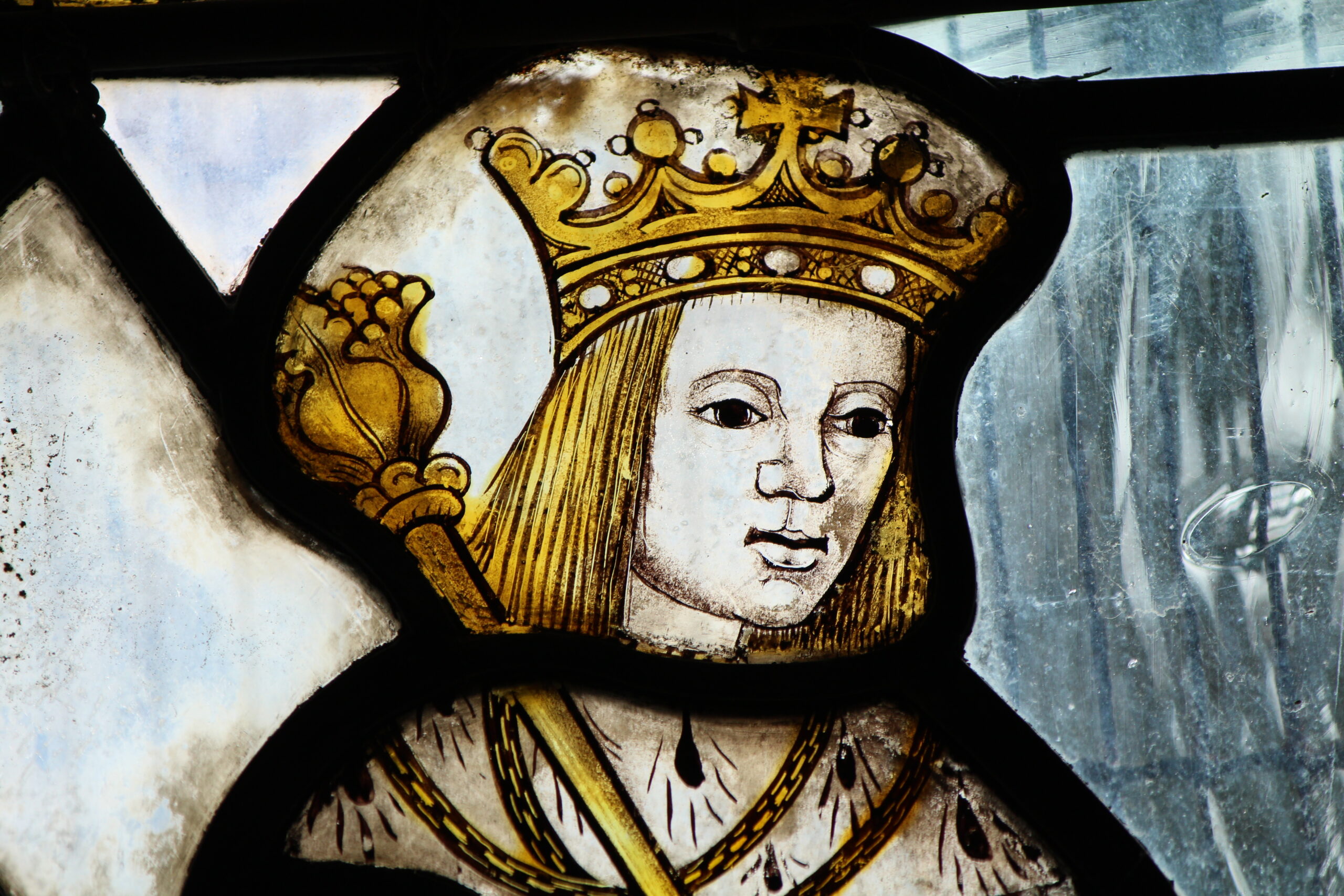
Edward V (Window at Coldridge Church, Devon)
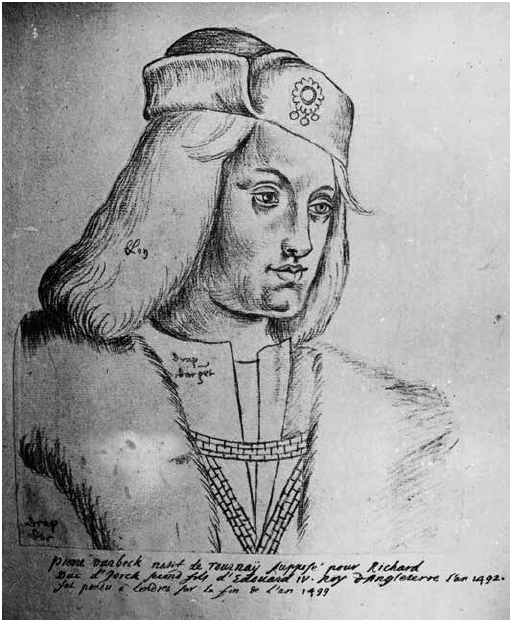
Richard of England (Bibliotheque Municipale, Arras, France)
What does this new evidence tell us?
Adhering to our mission of research and reassessment, one of our own members has published new evidence of the kind the Society seeks to further study in this area. The published evidence does not support the traditional story. Philippa Langley, in her book The Princes in the Tower (The History Press, November 2023) reports investigative work by The Missing Princes Project, an international team of researchers set up by Langley to comb archives for traces of what happened to them. This newly found evidence offers explanations of their later activities – giving details which have been lacking all these years. There are two Princes, and two stories to tell.
First, Edward: Soon after Henry VII seized the throne, a fleet was amassed in Flanders in the name of a young claimant, supported and financed by Richard III’s sister, Margaret of Burgundy, and her son-in-law King Maximilian. The fleet sailed to Ireland, the claimant was crowned King Edward in Dublin, and his combined army engaged Henry VII, unsuccessfully, at the Battle of Stoke in 1487. Henry VII’s government put out a story that his challenger was an imposter posing as Edward, Earl of Warwick whose real name was ‘Lambert Simnel’, and history duly accepted this narrative.
The evidence brought to light by Langley’s project consists of an important private document, a receipt issued to King Maximilian six months after the battle that identifies the recent claimant not simply as the nephew of Richard’s sister the Duchess of Burgundy but as ‘the son of King Edward, late her brother’. The book offers a number of sources to support this document.
Second, Richard: A little later there appeared another claimant to challenge Henry VII’s crown, again supported by Margaret and Maximilian, again with a fleet gathered in Flanders. This young man gained even wider support, including from some of Europe’s leading royal families. However, his challenge was also defeated. He was captured and executed by Henry VII, who extracted a confession under duress to the effect that he was ‘Perkin Warbeck’ or ‘Piers Osbeck’, a boatman’s son from Tournai.
History has almost unquestioningly accepted these aliases, in the absence of the kind of first-hand evidence that would explain how the Princes disappeared and what happened during the years before they resurfaced. The extraordinary evidence relating to Richard of England, as published by Langley’s project, now offers a coherent and detailed account to counter this. Written in an authentic 15th-century hand, and evidently recorded in the first person by the young man who claimed for a number of years to be Richard himself, it explains how the boys’ removal from the Tower was arranged, and by whom. It cites names and identifiable events, and describes the wanderings of the child Richard under guardianship during his underage years, until at last he joined Margaret and Maximilian in Burgundy and made his bid for the throne. The latter part of the account is corroborated by the forced confession of ‘Perkin Warbeck’, which agrees in all major details with this new source from the point that the writer describes going to Lisbon with Edward Brampton’s wife. This similarity in two documents whose purposes are vastly different seems to confirm that they were both based on an account by the same person.
The above documentation cannot be ignored by serious historians. It means that never again can it be stated with confidence that the ‘Princes in the Tower’ were killed by Richard III.
Further archival discoveries were published in May 2025. For more on the new discoveries visit The Missing Princes Project here.
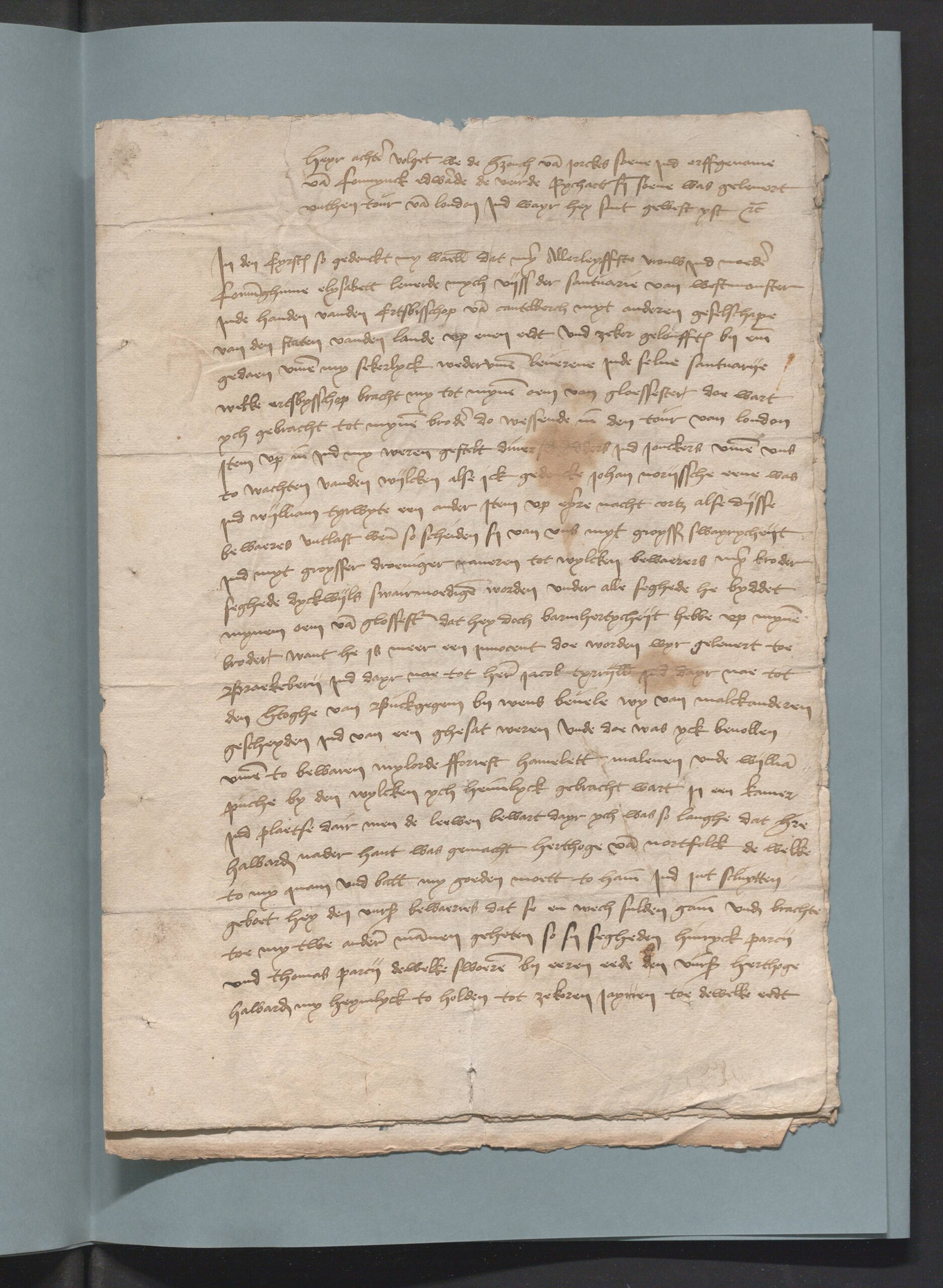
Richard of England Witness Statement (Gelderland)

Richard of England, Charter - 4th October 1493
Is the Case Closed?
Certainly the amount of new discoveries made is offering this conclusion. If the same amount of archival materials had been discovered for the ‘murder’ of the Princes then this would undoubtedly be the conclusion. There is also likely to be more evidence waiting to be found which will further deepen our understanding and knowledge of these events. This happened in August 2025 which you can read here. As a research society, we seek to ensure any evidence (either positive or negative) is rigorously analysed, and we encourage healthy debate amongst our membership. This is certainly an incredibly exciting investigation.
To learn more about Edward and Richard, visit here.