External Links
External Links
The Missing Princes Project
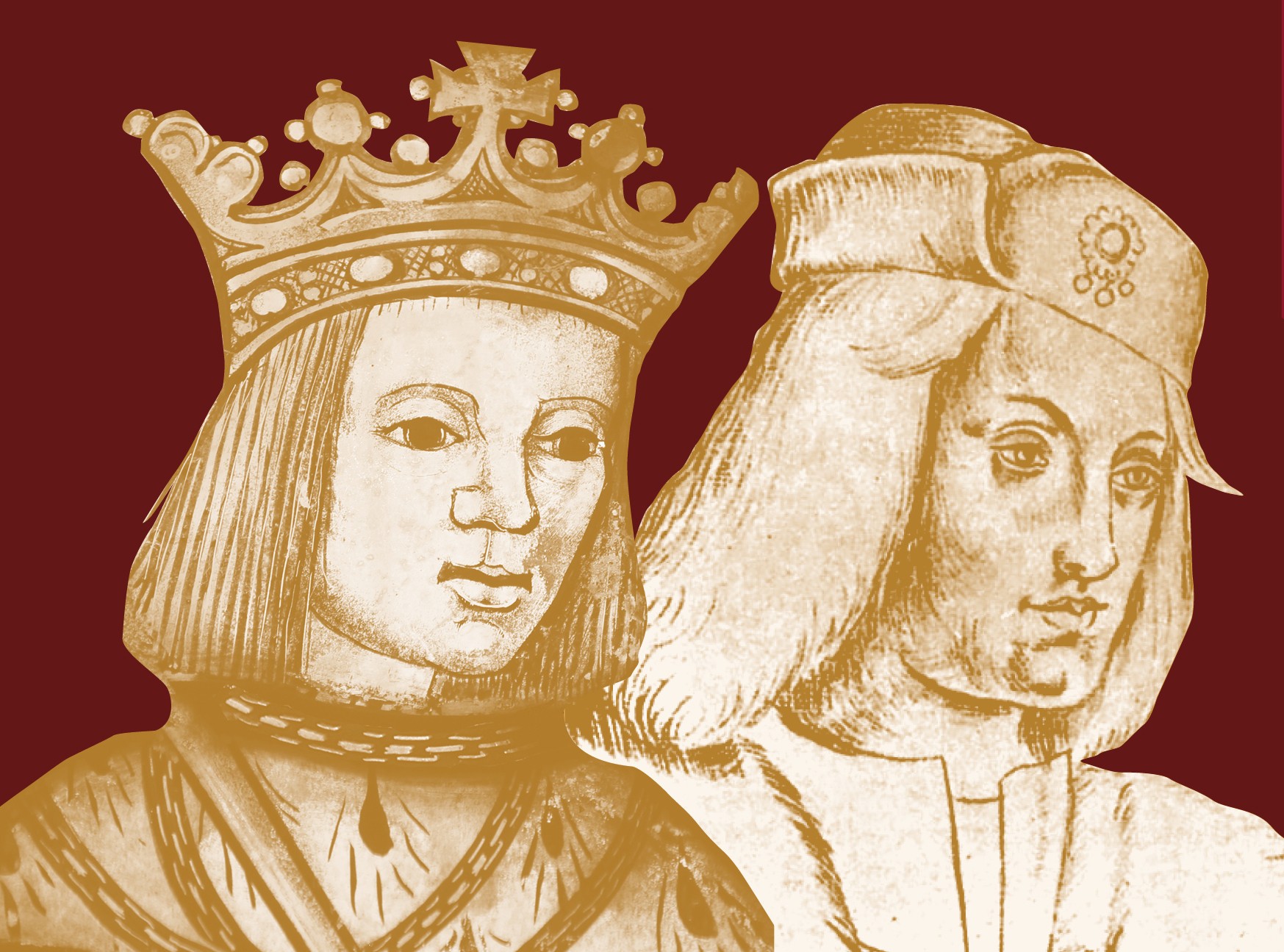
Following years of intensive research by Philippa Langley and her international team, she reveals the findings of The Missing Princes Project. Using police cold case methodology, it places the most enduring of mysteries about what happened to the ‘Princes in the Tower’ under a forensic microscope, unearthing an astonishing untold story of survival and uncovering remarkable new archival discoveries of proof of life. It is the first time that police cold case investigation analysis has been applied to a centuries-old historical mystery, leaving no stone unturned, and the results are extraordinary, rewriting history.
The Yorkist History Trust
During the quincentenary celebrations of Richard III’s reign, the Richard III Society established a Trust with charitable status to take over much of the Society’s academic publishing and some of its research activities. It is a separate entity from the Society but retains close links with its parent body which appoints the majority of the nine trustees. The Richard III and Yorkist History Trust was formally constituted in October 1985 in order to ‘further education, learning, and research related to the history of late medieval England (and in particular the life and reign of King Richard III) and to disseminate the results of such education, learning and research’.
The Trustees’ principal duties are to commission new publications and see them through to publication, and to assess applications from scholars and publishers for financial assistance towards their own research and the expenses of publication.
The Trust (now called The Yorkist History Trust) annually offers grants of up to £5,000 to facilitate research leading to the completion of editions of texts or leading to the completion of scholarly monographs relating to the political, cultural, religious, economic and/or social history of England in the fifteenth century, with preference given to projects focused on the Yorkist period (1461-1485). For further details and how to apply, and for a list of the Trust’s publications, please visit the Trust’s website.
Website – https://yorkisthistorytrust.org/
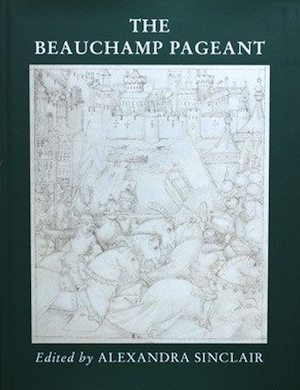
The Beauchamp Pageant, published by the Yorkist History Trust in 2003
Society Research Blog
A blog run by the Richard III Society’s Research Committee to share news of research into the life and times of Richard III.
The Richard III Society Education Website
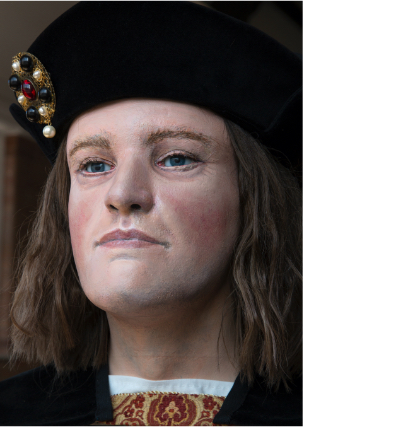
The Education website of the Richard III Society is intended to provide an introduction to the life and times of Richard III for learners of any age.
Wars of the Roses website
American Branch of the Richard III Society
The American Branch of the Richard III Society has its own website, which can be found at
Ricardian Churches Restoration Fund
According to historical record, Richard III was a deeply pious man and there are a number of churches that can claim a Ricardian connection either as direct beneficiaries from his largesse or because he is known to have worshipped in them.
For many years, the Richard III Society has raised money for its causes – aiding the restoration of historic buildings, beautifying Ricardian sites, erecting monuments, etc. In 1975, the Ricardian Churches Restoration Fund, or RCRF was founded, its guiding light for many years being the late Joyce Melhuish. Since its inception, the RCRF has received no money from the Society but has raised all its funds through members and the general public. For the most part, this has been by the sale of craft work made by the members. To date, the fund has made donations totalling well in excess of £30,000.
Any church that has a connection with Richard III is entitled to call upon the Fund for assistance, although obviously the amount that can be given is limited and very much dependent upon what is in the coffers at the time of asking.
Five Churches qualify for ‘Grade One’ membership of the RCRF – Fotheringhay, Middleham, Sheriff Hutton, Barnard Castle, and Sutton Cheney.
Other Churches which have benefitted from the RCRF include – Lead Chapel, Towton, Wingfield, Great St Helen’s, Bishopsgate, London, York Minster, King’s College Chapel, Cambridge.
For further information, please email Miss Elizabeth Nokes at e.m.nokes@gmail.com.

The Society's Memorial Window at Middleham Courtesy of Phil Stone

The alabaster tomb at Sheriff Hutton Courtesy of Amanda Geary
Canadian Branch of the Richard III Society
The website of the Canadian Branch of the Richard III Society can be found here –
The Friends of Fotheringhay Church
Fotheringhay Church has, over the years, become the principal ecclesiastical establishment associated with the Richard III Society and close links have been forged between the parish and the Society. The church has also been the beneficiary of a number of gifts from the Society and the Ricardian Churches Restoration Fund (RCRF).
The parish of Fotheringhay is much too small to support such a large building and especially one that is in need of renovation so, in 1997, when the Friends of Fotheringhay Church was formed, it had two main objectives, to raise money and to publicise the church. It is probably fair to say that it has been more successful with the second of these than the first. However, funds have been raised for various needs, including restoration work on the tower; the clearing of the room over the porch, and the installation of a window containing medieval coloured glass; and the cleaning of the Decalogue panels behind the altar.
The Membership fee for the Friends of Fotheringhay Church is very modest and all members are made very welcome. The AGM continues to take place in November, sometimes in the church and sometimes in the village hall. Each year there is a speaker, and the topics are varied, though an attempt is made to alternate between subjects suited to devotees of Mary, Queen of Scots, and those of Richard III.
For further information contact Diane and Robert Stewart, Willow House, 28 Fotheringhay, PE8 5HZ
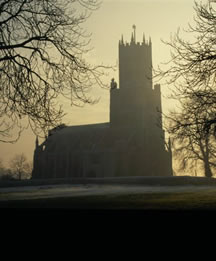
Fotheringhay Church
The Battlefields Trust
The Battlefields Trust is a registered charity dedicated to the protection, promotion and interpretation of Britain’s battlefields. The Society has often worked alongside the Battlefields Trust, such as when we worked together to oppose the building on Bosworth Battlefield.

Barley Hall
In recent years, Barley Hall has become a familiar feature of the historic city of York. What is not so well known is that it is probably one of the most exciting historical projects in the country. The timber-framed house, which has its origins in the fourteenth century, was rediscovered in 1987 behind a layer of brick cladding and the additions of many centuries.
Originally the building, now known as Barley Hall, was a monastic town house for the Augustinian Priors of Nostell in the fourteenth and fifteenth century. For members of the Richard III Society the most important tenant, and the one around whom the reconstruction of the hall was done, was Alderman Snawsell, Lord Mayor of York in 1468, Master of the Royal Mint in York and MP for the City in 1470. He visited Prince Edward at Middleham in July 1483, together with his fellow aldermen, to present gifts, and he attended the investiture of King Richard’s son, Edward, as Prince of Wales in the Minster in September 1483.
Barley Hall was purchased by York Archaeological Trust (YAT) and excavations took place, together with research into documentary evidence. It was then decided by the YAT to restore the hall, as accurately as possible, to its late 15th century form when it belonged to William Snawsell. One of the major achievements was the completion of the great hall. By a rather curious quirk, the hall, which is at the heart of this building is bordered by a public right of way that was the original screen passage and which now separates this historic building at the ground-floor level. The passage is presently the link between Stonegate and Swinegate through Grape Lane. The passage end of the hall is glass-faced thus providing a unique and unexpected glimpse into the past for passers-by. Other rooms that have been completed include the buttery, the pantry and the first-floor parlour.
The Hall is run by the YAT and is open on most days of the year,
Barley Hall, 2 Coffee Yard, off Stonegate, York YO1 8AR
Tel: 01904 615505
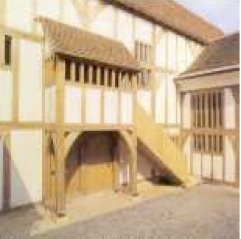
Barley Hall

The Great Hall, Barley Hall
Rosalba Press
Rosalba Press is the publishing arm of the Yorkshire Branch of the Richard III Society and it has its origins in the 1970s. Over the last thirty plus years, the Branch has brought out books and booklets, at an affordable price, on such varied subjects as Richard of York, the medieval manor court of Wakefield, and Peter Foss’s study of the battlefield of Bosworth, The Field of Redemore.
The publishing activities of the Yorkshire Branch began in the late 1960s with its magazine, named Blanc Sanglier after Richard III’s white boar badge. This quickly settled into a three-times-a-year rhythm. Then, in the 1970s the Branch received a legacy from the will of one of its keenest members, Fred Phillips, and decided to use it on some special project not just put it into funds. At about that time another member was completing his research on Richard of York, Richard III’s father. It seemed appropriate that the Branch publish Richard, Third Duke of York by Ian Postlethwaite as a memorial to Fred, to show our gratitude. We did not visualise then that any more publications would ensue, and so it appeared simply under the imprint of Yorkshire Branch, Richard III Society.
At first the booklets were distributed by Richard Knowles. At that time he and Pauline Routh were carrying out their joint researches in church monument and tomb effigies. In particular they had studied the alabaster monument in Sheriff Hutton church thought by some to be the tomb and effigy of Edward Prince of Wales, son of Richard III. Some controversy arose, and in 1981 they were ready to publish their reasoned research, Ian Postlethwaite’s book had sold out and the money had gone into a special Publications Fund, which was thus ready to be used on another venture. With the prospect of this cycle repeating itself in the future, each publication being financed by the one before, the Branch committee thought it time to discuss a name for the imprint.
The suggestions were many and varied, most being on the White Rose theme, we having already used the White Boar in our magazine. Eventually it was agreed to take the one which put Rosa Alba (white rose) into one word as Rosalba, adding Press. It was put on a proper footing, and an ISBN (International Standard Book Number) was obtained from the Agency. In 1981 Routh and Knowles’s Sheriff Hutton alabaster: a reassessment was published by Rosalba Press.
Although publication of research was recognised as the main aim of Rosalba Press, other perceived needs could be met. In 1985 Mary O’Regan and Arthur Cockerill compiled a Gazetteer of Yorkshire in the 15th century. This was to commemorate the reign of Richard III, who died in 1485 and was a summary of places in Yorkshire with 15th century connections. The next publication of Rosalba Press was by far its most ambitious at that time. There was much interest in Richard III in 1985 and following years. In particular, the received wisdom about the battlefield of Bosworth came under scrutiny. Midland historian Peter Foss had long studied the accounts of the battle (and other documents) and the geology and topography of the area around Sutton Cheney and Ambion Hill, and had come to revolutionary conclusions regarding the site of the battle. His theories had not been published, and the Branch thought strongly that they deserved a wider circulation. Arthur Cockerill was the moving force behind the publishing of The Field of Redemore (1980) which was acknowledged to reflect great credit on the Branch. He looked after every aspect of the production and distribution, taking over from Richard Knowles. The book sold well, recouping the heavy costs of production.
The next project was Mary O’Regan’s The Medieval Manor Court of Wakefield (1994). This was original research on a medieval theme, so although not strictly Ricardian it was thought highly suitable for Rosalba Press. In essence it was legal history, based heavily on a thesis for the LL.B (Hons) degree. Like the previous two publications it used ‘desk-top’ publishing techniques, being home-designed and giving camera-ready copy to the printer.
The same was true of the next two publications, in 1999 and 2000. Richard III: a brief life by Mary O’Regan, was essentially the script of a talk given to a Branch AGM, expanded to booklet size and with added illustrations. The second, Janet Senior’s Sheriff Hutton and its Lords, was written to commemorate the 600th anniversary of Sheriff Hutton Castle. They were designed and produced for the printer by Mary O’Regan, who also took care of the next title, Sir William Stanley: a Yorkist Martyr?/em> by Jean Gidman, published in 2003. This was our second large-scale production, being the fruit of many years’ research by the author, and the first full-length study of Sir William Stanley.
By now, printers’ methods had changed, and texts and illustrations could now be given to them on computer disk, either floppy or CD. Colour printing was also possible, if on a small scale because of cost.
Our two most recent publications are Who was Who in the Wars of the Roses (2005) and Richard III, The House of York and their Supporters, both by Pauline Harrison Pogmore.
The Yorkshire Branch received no subsidies for its publishing work. We are proud of Rosalba Press’ back list, and the fact that all except one of its titles are by members of the Branch. We hope to continue publishing research and reference works by members (and possibly others) into the future.
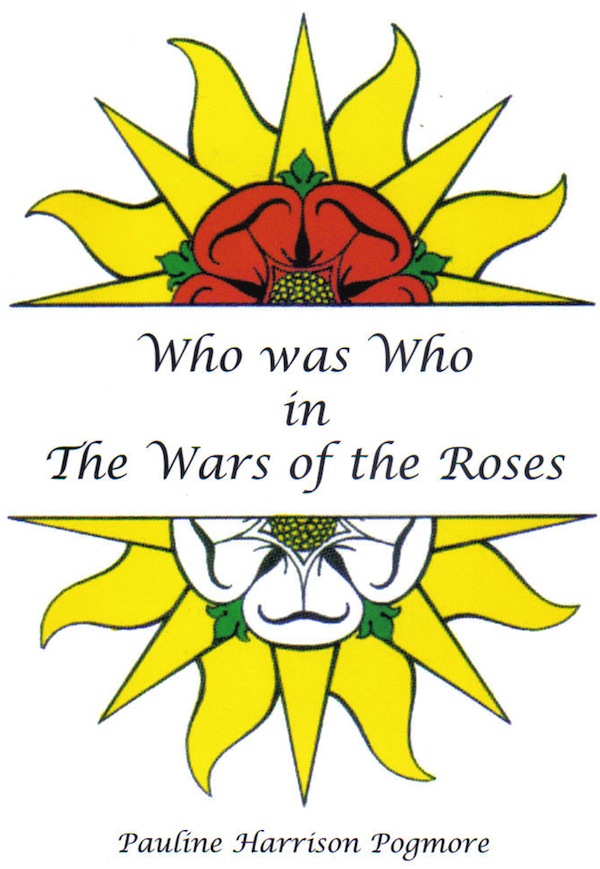
Who Was Who in the Wars of the Roses published by the Rosalba Press
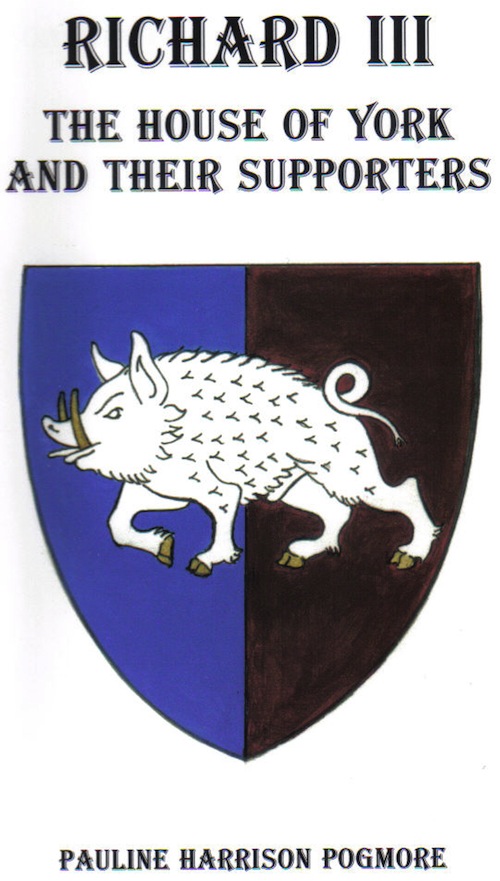
Another publication of the Rosalba Press, Richard III The House of York and their Supporters
Graham Turner
Graham Turner is well known for his medieval paintings, with originals – and prints reproduced from them – gracing the walls of many an historian or re-enactor’s home, while a selection of the numerous books he has illustrated on the turbulent period can usually be found in their libraries. Graham Turner has very kindly allowed the Society to reproduce many of his paintings on this website.
He has always had a fascination for our medieval past, but it has now developed well beyond the castles and knights in shining armour of his childhood. His first romanticised view of the medieval ‘Knight Errant’ was exhibited in 1992 and later published by a leading print publisher. However, as interest in Graham’s historical work blossomed and his knowledge increased, he quickly found his attention focusing more on the reality of this turbulent period rather than the chivalrous ideal.
However, he has now taken his research that bit further. Believing that there is no substitute for first hand experience, Graham has joined ‘Destrier’ and wearing a complete suit of replica 15th century armour, is now jousting himself.
After 18 months of training, he took part in his first two tournaments in June 2004 and concluded his first jousting season very successfully with victories at the Herstmonceux Medieval Festival. 2005 saw him competing in English Heritage’s Knights Tournament series.
On 29th June 2013, Graham’s painting of King Richard III was unveiled at Bosworth Battlefield and Heritage Centre. The painting incorporates all the latest information about the king’s appearance following the discovery of his remains in 2012.
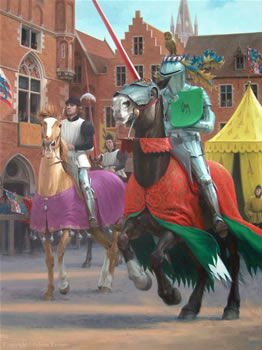
Joust by Graham Turner
Mortimer History Society
A Society for those interested in the medieval Mortimers and the history of the Welsh Marches. Warlike, ambitious and powerful, the Mortimers bestrode the medieval stage, inextricably linked with the great events of their time, their story is the tale of a turbulent England racked with dissension, rebellion and open warfare at home and abroad.
Middleham Castle
The former home of King Richard in North Yorkshire, Middleham Castle is now in the care of English Heritage. For more information, and details about visiting the Castle, please visit

Middleham Castle
Barnard Castle
Previously owned by Richard III, where it is likely he undertook some building work (a Boar badge can be found on a slab above an oriel window), Barnard Castle is now in the care of English Heritage.

Barnard Castle
Jennifer Morag Henderson
Jennifer Morag Henderson is the author of ‘Josephine Tey: A Life’, the first biography of the author of ‘Daughter of Time’. Jennifer gave a fascinating talk to the Richard III Society at the Merchant Adventurers Hall in York as part of the Society’s 2016 AGM. Her website can be found at
Andrew Stewart Jamieson
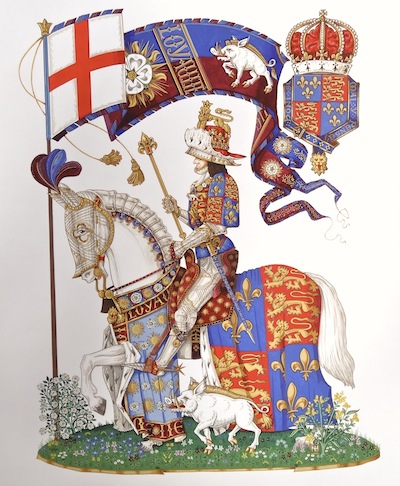
Expert in caligraphy, heraldic art and manuscript illumination, previously worked as a freelance heraldic artist for the College of Arms in London.
His website is https://www.andrewstewartjamieson.co.uk/