
Richard’s Family
Cecily Neville, Duchess of York (Mother)
by Dr Joanna Laynesmith
Cecily, Duchess of York is one of the best documented and most fascinating women of the fifteenth century. She was, for a time, the most powerful woman in England and she was an astonishing political survivor through many regime changes.
Cecily was born in 1415, the daughter of a staunchly Lancastrian family, and she was married to Richard, Duke of York before her tenth birthday. He was her father’s ward as the orphaned son of a traitor. He was also the heir to a huge fortune and a potential claim to the throne of England. After ‘a long time of barrenness’, the couple had twelve children, seven of whom survived infancy. It appears to have been a happy marriage – York trusted her to act on his behalf in business and politics and he spent huge sums on her clothes and jewels. Cecily’s youngest surviving children were Margaret (future Duchess of Burgundy), George and Richard. These children were with her during some of the most traumatic years of her life, as the Lancastrian kingship collapsed and her husband made his unsuccessful bid for the throne of England. She would have supervised their early education, perhaps taught them to read.
In the winter of 1460/61 Yorkist fortunes were at their lowest, following the Duke of York’s death at Wakefield and the Earl of Warwick’s defeat at St Albans. For their safety Cecily sent the boys, aged just eleven and eight, to the court of the Duke of Burgundy. Her decision to remain in London to defend the interests of her only other surviving son – the eighteen year old Edward, Earl of March – indicates her priorities and her ambition for her family. Immediately after their return to England the King’s little brothers, like their mother, probably spent much of their time within the royal household. Richard may well have been nearly thirteen before he left the regular company of his mother for the household of the Earl of Warwick.
As King’s mother, Cecily used her own vast wealth and wide administration to support Edward IV’s policies. One observer claimed in 1461 that Cecily ‘can rule the King as she pleases’, although it seems unlikely that she retained such influence as Edward grew older. Decades later, writers plausibly recorded that she was appalled by Edward IV’s choice of queen. Nonetheless, Cecily loaned one of her longest serving gentlewomen to the new queen’s household and later events indicate that if there were tensions early on these were very soon resolved.
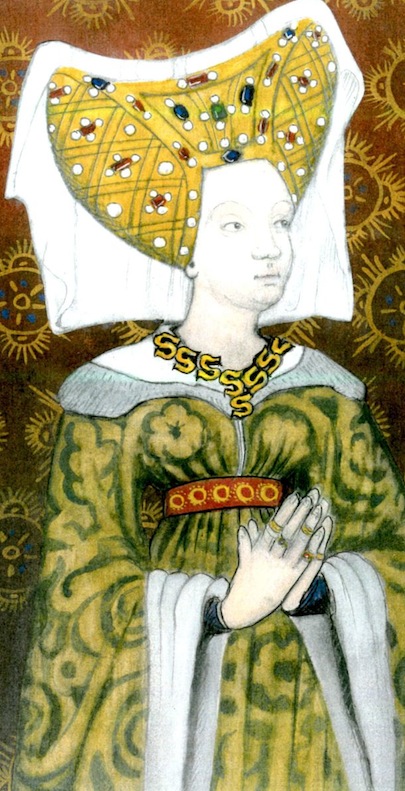
Cecily Neville, Duchess of York, redrawn by Geoffrey Wheeler © from an illumination in the Neville Book of Hours (Bibliotheque Nationale de Paris, Paris: MS Latin 1158, f.34v)
Family Division
The year 1469 was to prove the first real test in Cecily’s relations with her sons. This was the year that George, Duke of Clarence, joined forces with his father-in-law, the Earl of Warwick, to rebel against and imprison Edward IV. During their rebellion, it was rumoured that Edward IV was a bastard. This was a very common trope in medieval literature criticising kings and there is no evidence that anyone actually believed it. (Michael Jones argued that the rumour was true, claiming that Cecily and the Duke of York had been apart at the time Edward IV was conceived. This inspired a ‘documentary’ with Tony Robinson. However, Livia Visser-Fuchs has since demonstrated conclusively that this interpretation was based on a misreading of the relevant source). Warwick may have intended to use the slander to justify making Clarence king instead. Through this troubled time, Richard was steadfastly loyal to Edward, despite his own connections with Warwick.
But where did Cecily stand? Before Clarence and Warwick set sail for Calais to launch their rebellion Cecily spent five days with them at Sandwich. Michael Jones suggested that she had fallen out with Edward and was in favour of the rebellion. However only months earlier Edward had named his second daughter after Cecily and as soon as Edward regained his throne in 1471 he took his wife and children to join his mother at her London home.
My suspicion is that Cecily knew nothing of rebellion but was aware of Clarence’s plan to marry Warwick’s eldest daughter in defiance of the King. If so this suggests that for all her loyalty to Edward, Cecily did not always put him entirely before her other sons – she wanted George to marry England’s most eligible heiress. Throughout Henry VI’s readeption Cecily remained in London, and hosted visitors including Lady Margaret Beaufort, but she also worked to persuade Duke George to switch back to supporting his brother.
Cecily’s relationship with Richard in the 1470s is perhaps best illustrated by records of a land dispute in Essex that arose between their servants. Richard had a financial interest in the land himself, but surviving letters reveal his willingness to allow Cecily to lay down the terms and place of negotiation. Ultimately the affair was settled entirely in her man’s favour. Cecily’s letters also indicate her affection for Richard: she expressed regret that he had not been able to visit her recently when Edward was with her at Berkhamsted, yet she had seen Richard only a few weeks previously at Syon.
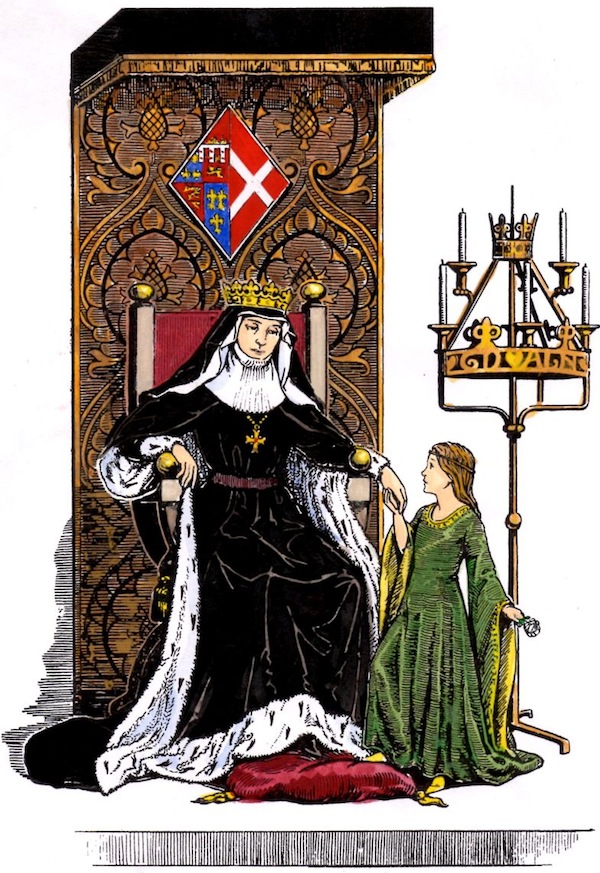
Cecily the Widow ©Geoffrey Wheeler
Cecily's Piety
By the 1470s Cecily was developing a greater interest in religion and she may have shared some of this with Richard. Notably he owned a copy of Mechtild of Hackeborn’s mystical account of her visions, The Booke of Gostlye Grace, a text which Cecily also owned. They may well have shared a wider interest in Carthusian spirituality. Although Cecily has sometimes been cited as a woman of exceptional piety, it is really the wealth of records for her religious interests that is unusual. Her much written of daily routine of Masses and devotional reading was similar to that recommended to all noblewomen and her religious patronage was relatively minor, especially compared with Richard’s own.

Engraving of a reliquary cross found at one of Cecily's homes, Clare Castle
Richard's Accession
This is about as much as we know about the relationship between mother and son before 1483. How far then did she acquiesce in his actions that summer? His use of her London home, Baynard’s Castle, suggests that she was not wholly opposed to his actions, yet she was not present at his coronation and indeed there are no records to indicate whether she was in London or Berkhamsted that summer.
There were rumours in London that Richard considered claiming the throne on the grounds that Edward IV was a bastard. However, there is no indication of such a justification in any official records. It may well be that London gossip was merely recalling the slanders that had surfaced five years earlier at the trial of Richard’s brother George, Duke of Clarence. However, this story suited later Tudor writers, especially Polydore Vergil, who wanted to gloss over the evidence that Richard III took the throne by arguing that Edward IV’s marriage was invalid and his children (including Henry VII’s queen) were bastards.
My suspicion is that Cecily did not actively promote Richard’s accession, but equally did not oppose it either. She was pragmatic enough to recognise the risks for the House of York and England that a child king would bring. By contrast her youngest son was a proven politician and warrior. Richard’s only surviving letter to his mother during his reign was written in June 1484. The wording seems to imply that there was no animosity between them but that they did not see each other on a very regular basis, ‘Madam, I heartily beseech you that I may often hear from you to my comfort,’ Richard wrote. If Cecily really resented Richard as Vergil claimed there would be little point in his writing such words. In May 1485, he spent a few days with her at Berkhamsted. That was probably the last time that she saw him before his death at Bosworth.
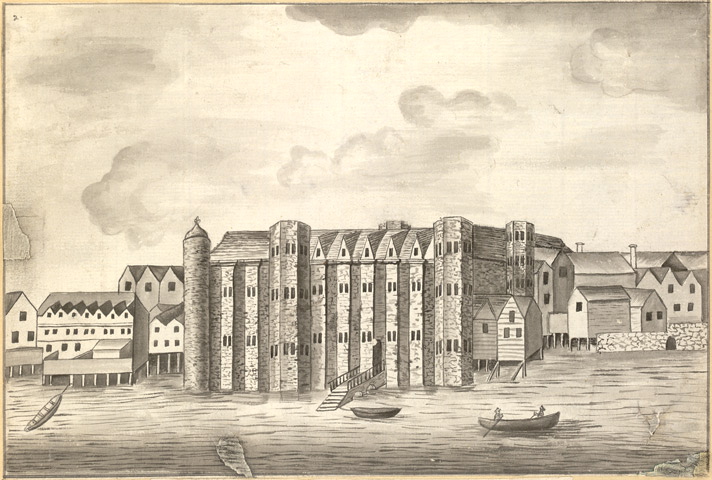
Baynard's Castle - Cecily's London home
Henry VII's Reign
After Richard’s death at Bosworth, Cecily reinvented her identity, as she had done at successive regime changes in the past. She was sometimes referred to as ‘the queen’s grandmother’ although she more often used variants on ‘wife unto the right noble prince Richard late Duke of Yorke, fader unto the most cristen prince, my Lord and son King Edward the iiijth.’ As far as I am aware, only one surviving document from this period connected with her administration referred to her as mother of Richard as well as Edward (and that was destined for a poor priory, unlikely ever to be seen by royal officials). Such a coldly political approach is disappointing to the modern reader, but Cecily was responsible not only for her own survival but also for the wellbeing of her huge affinity. From 1485-95 she worked with many of those closest to Henry VII and even appointed some of his councillors as executors of her will. This wonderfully detailed document is remarkable for its unusual focus on her servants’ wellbeing. She died at the age of eighty, and was remembered as ‘a woman of small stature, but of much honour and high parentage.’
A version of this article was first published in the Ricardian Bulletin Autumn 2005. Updated following publication of J L Laynesmith, Cecily Duchess of York (Bloomsbury 2017)

Berkhamsted Castle where Cecily died